
Series: Still Life — From Possession to Possessed
Tribecalledtrash is an ongoing body of work that questions our shifting relationship with materialism, impermanence, and meaning.
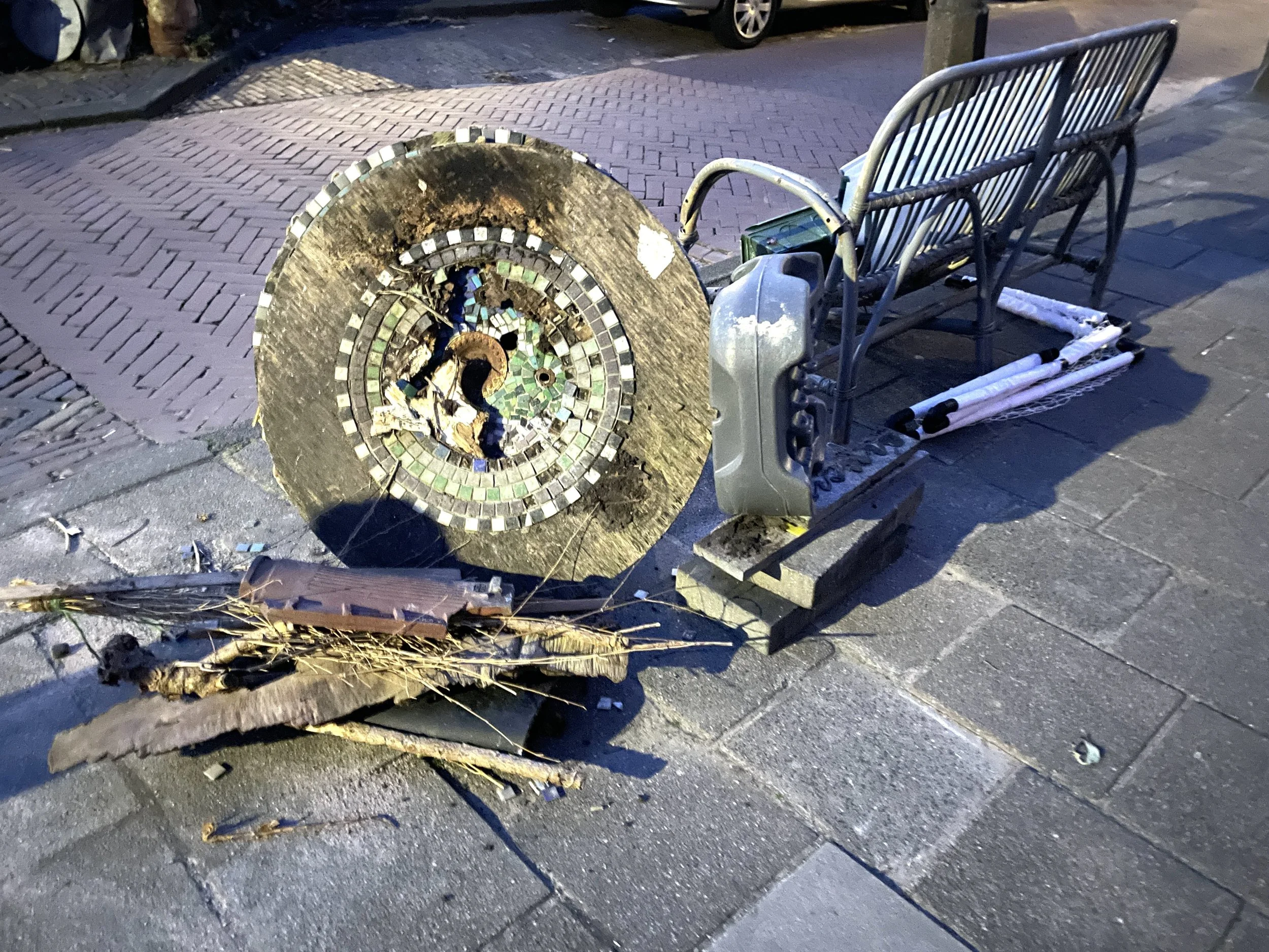
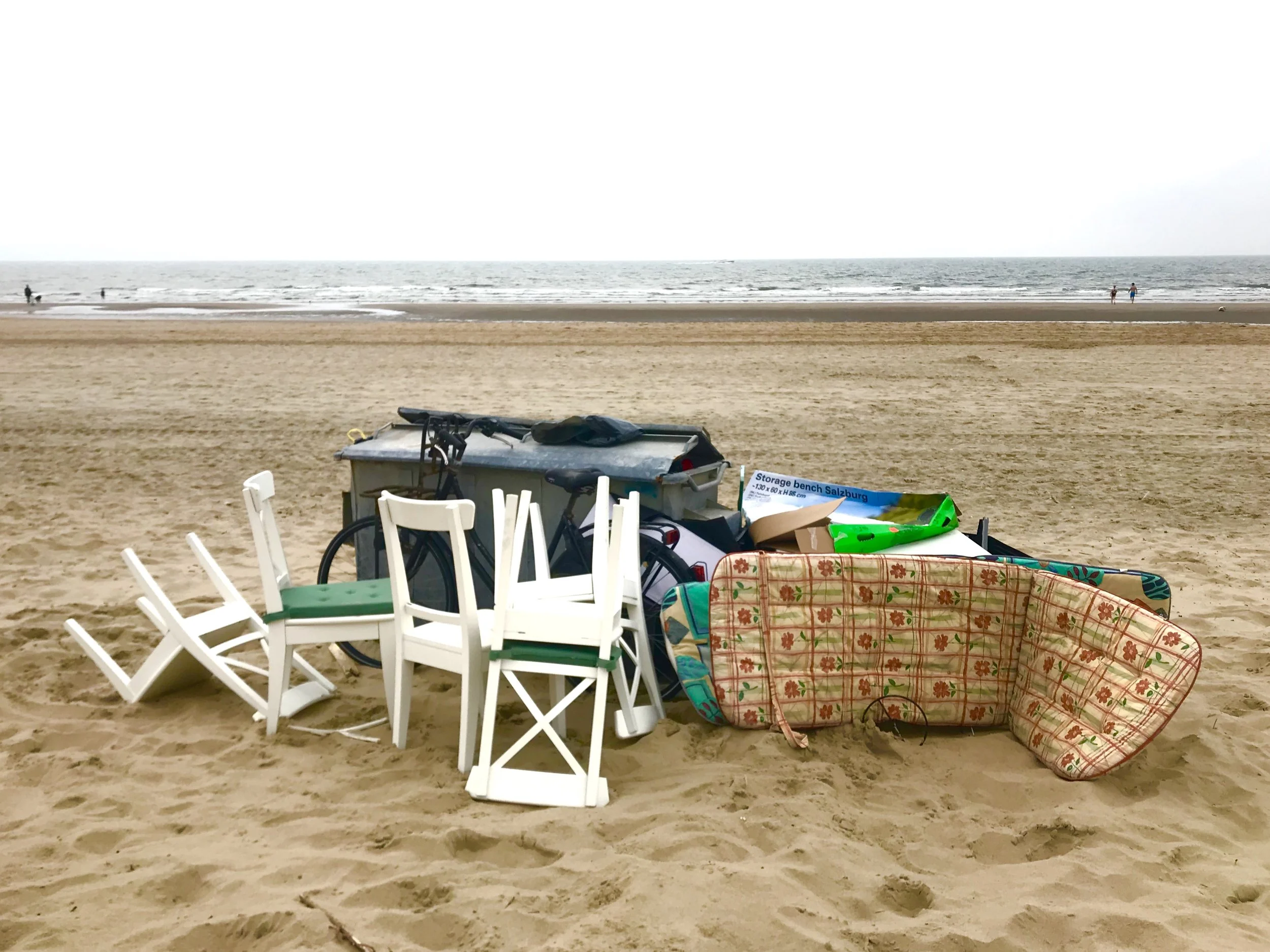
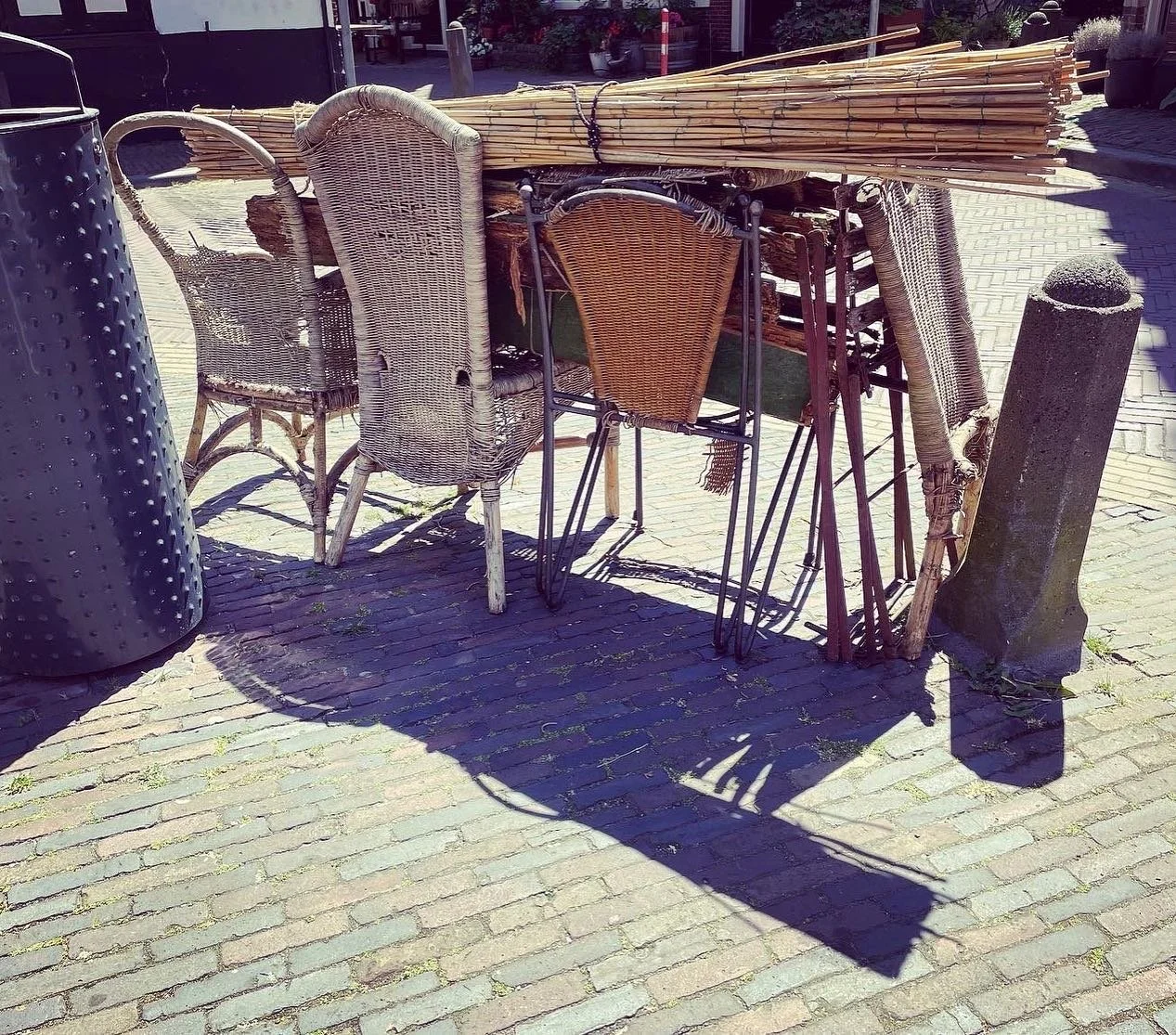
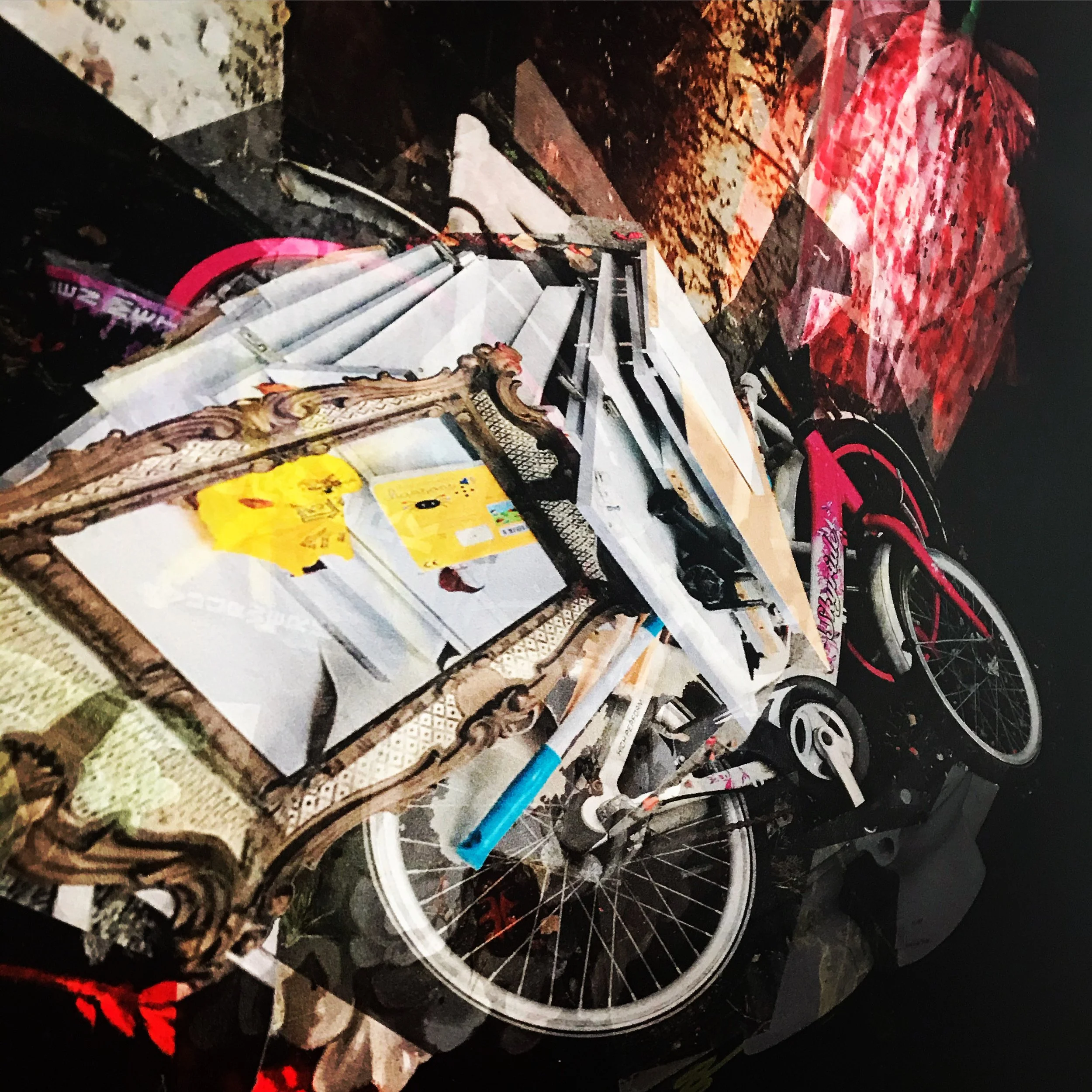
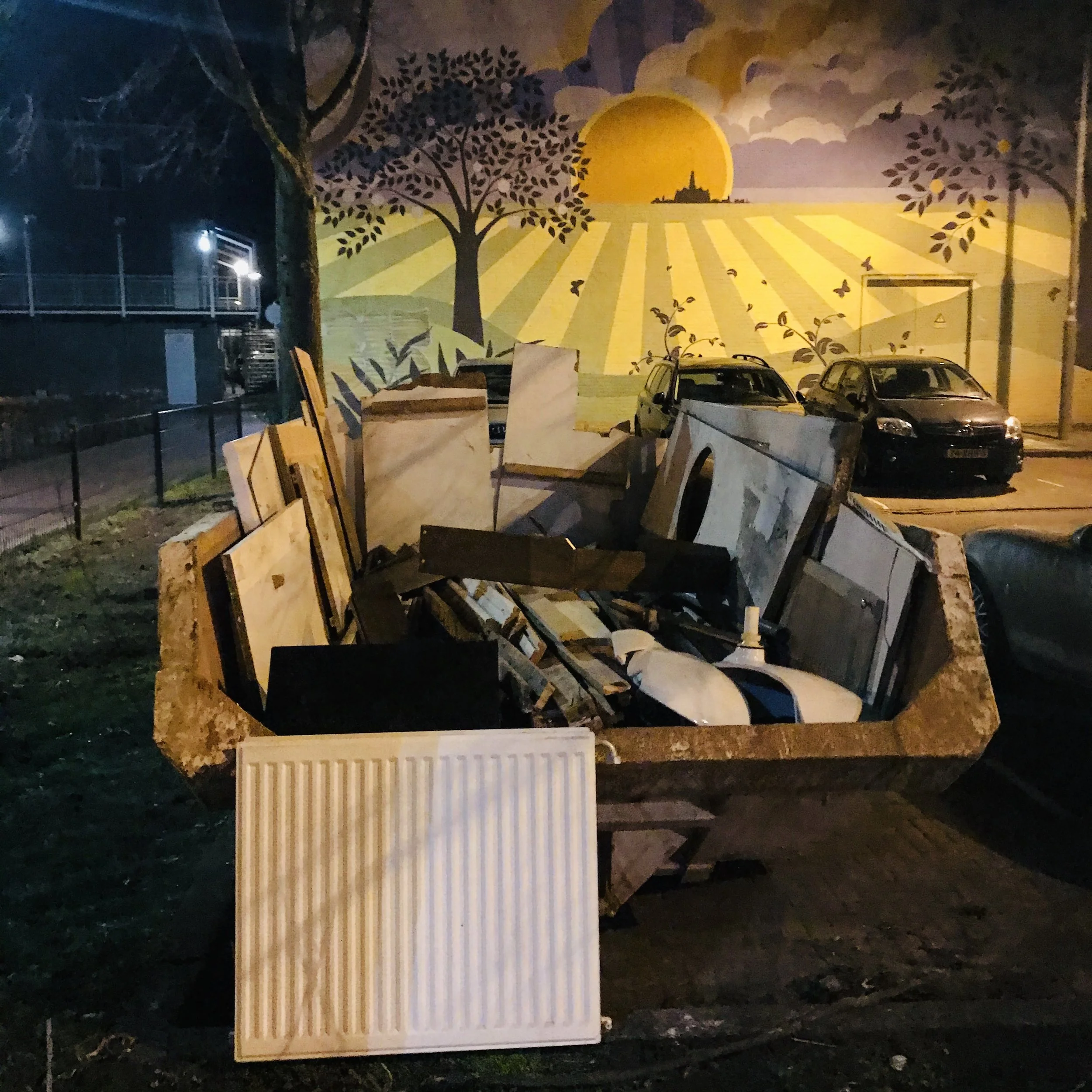
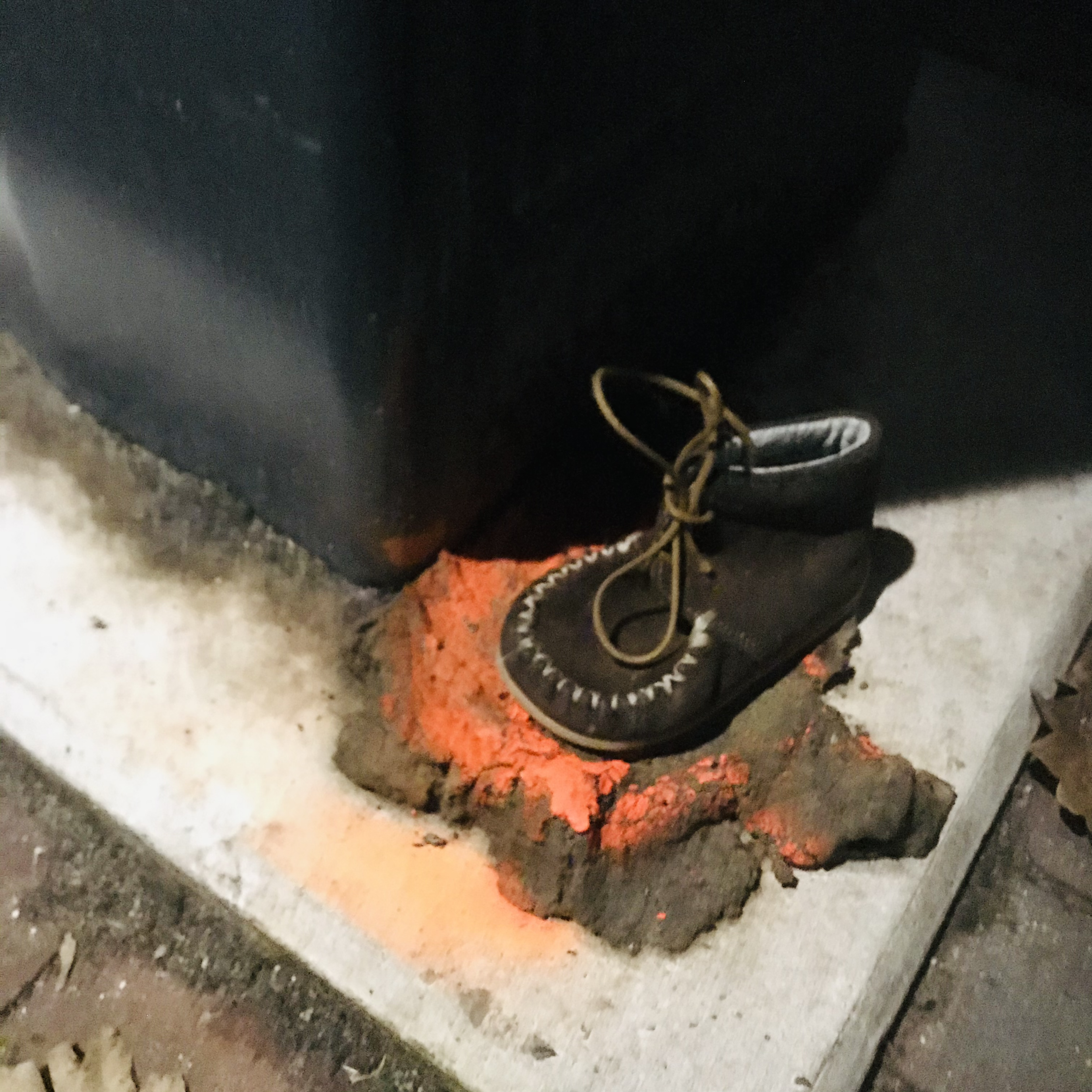
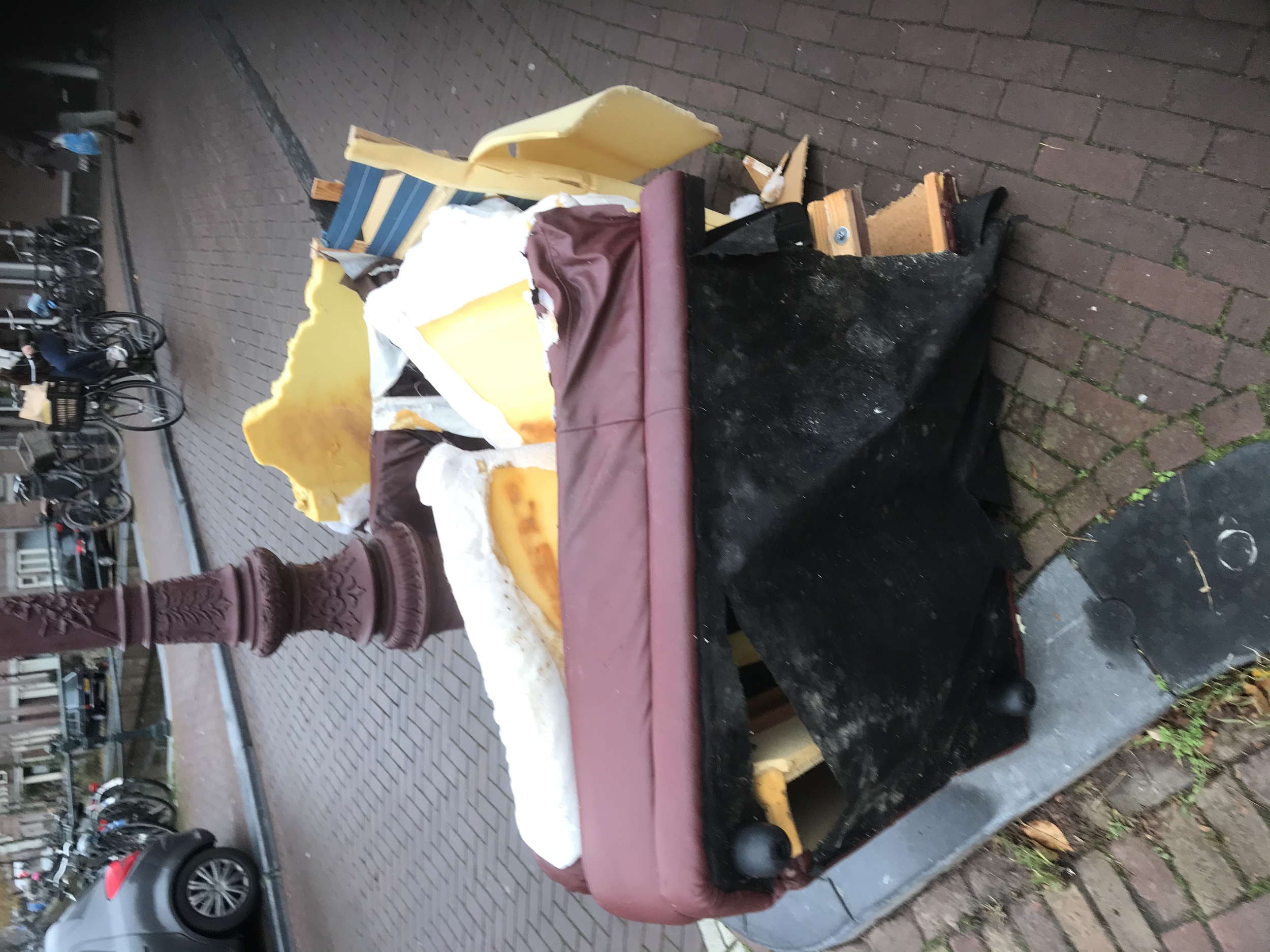
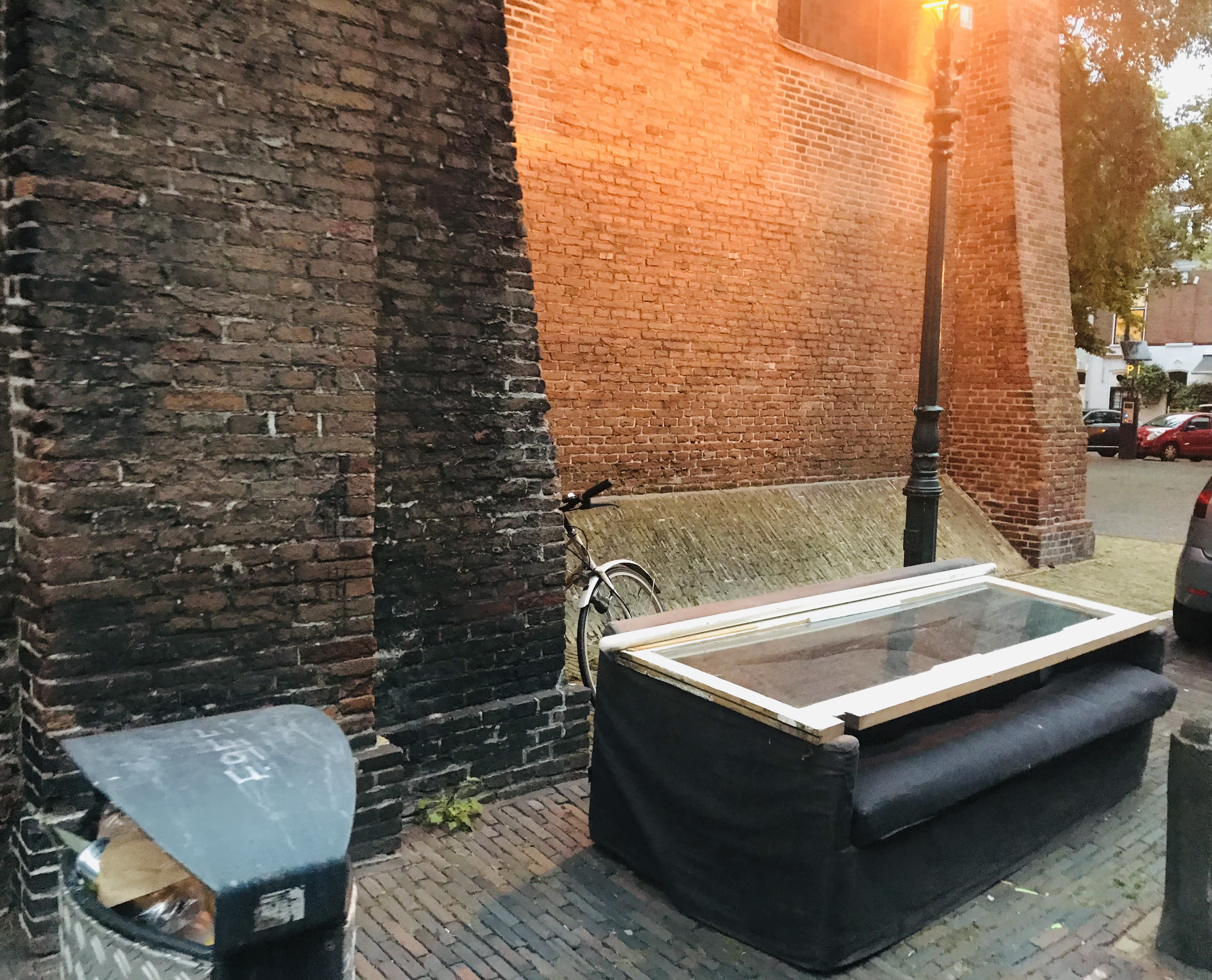
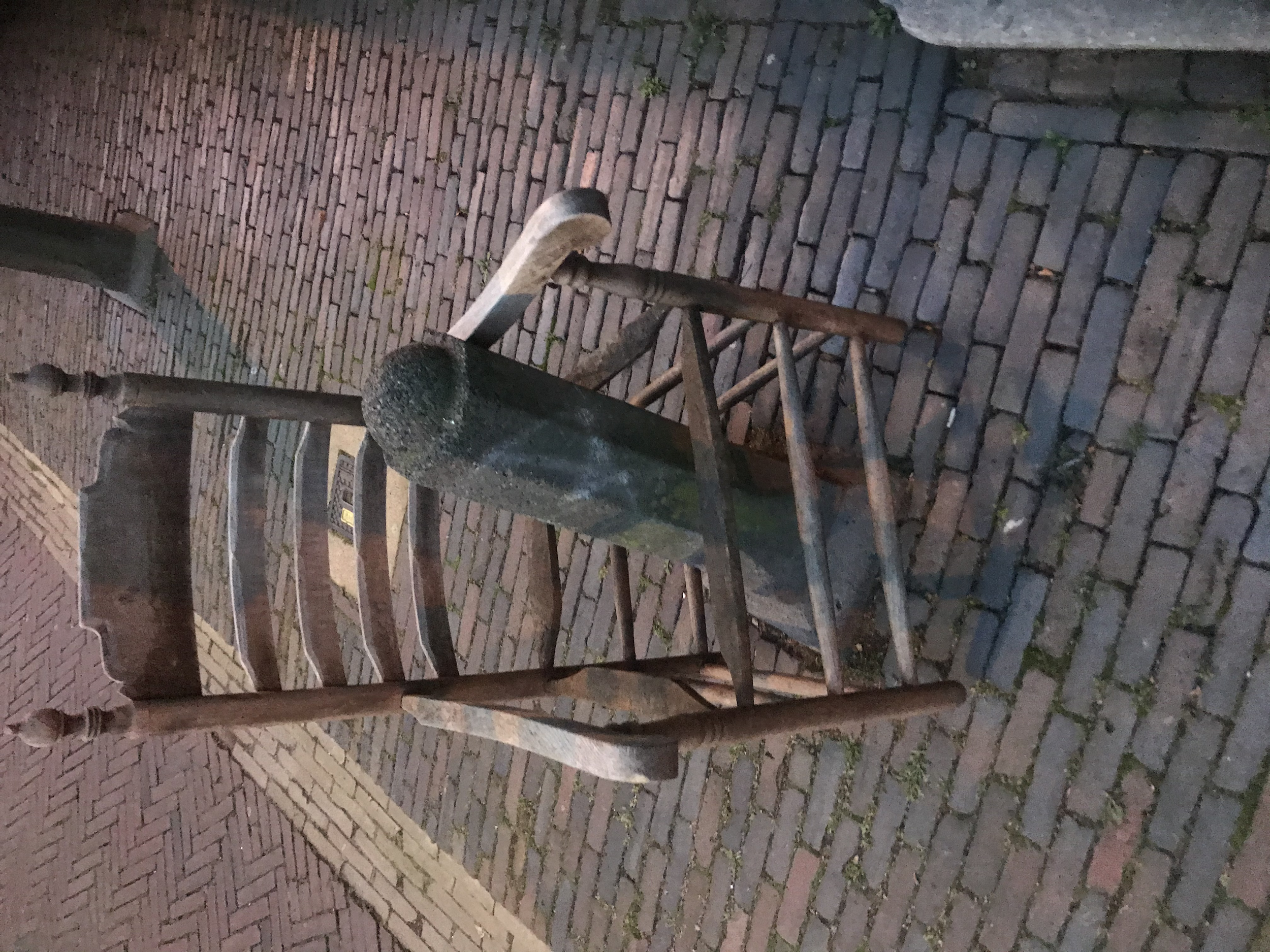
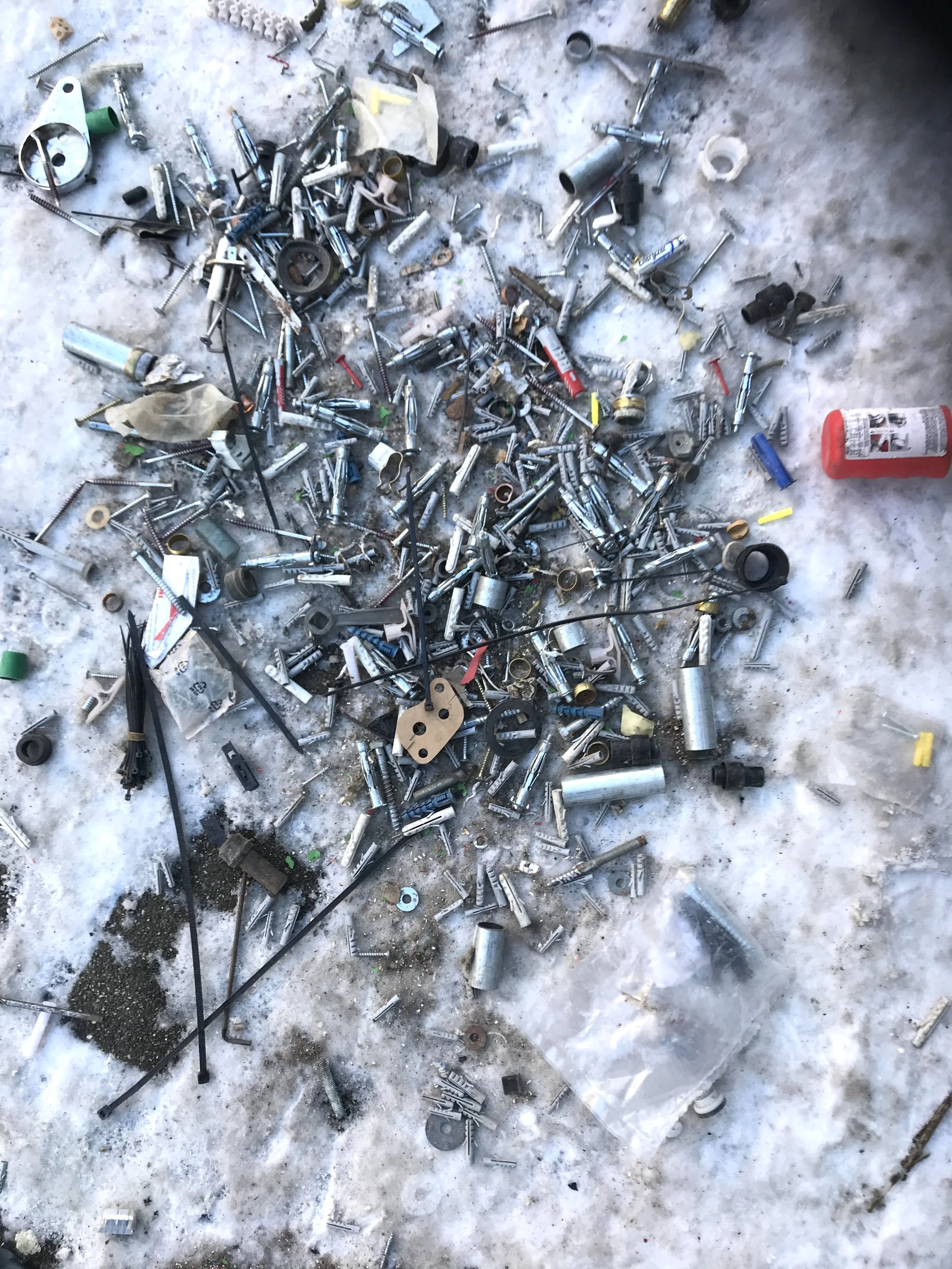
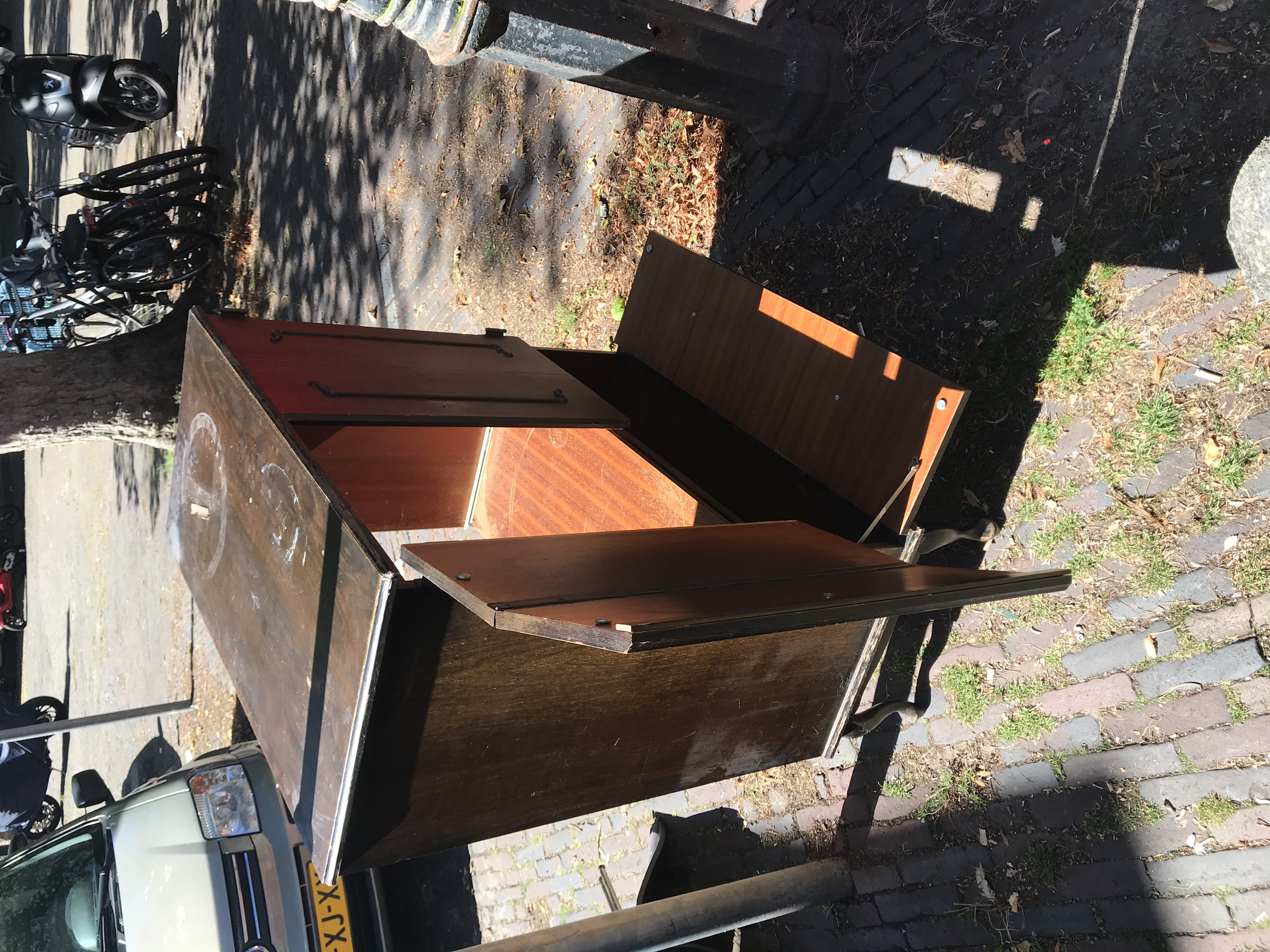
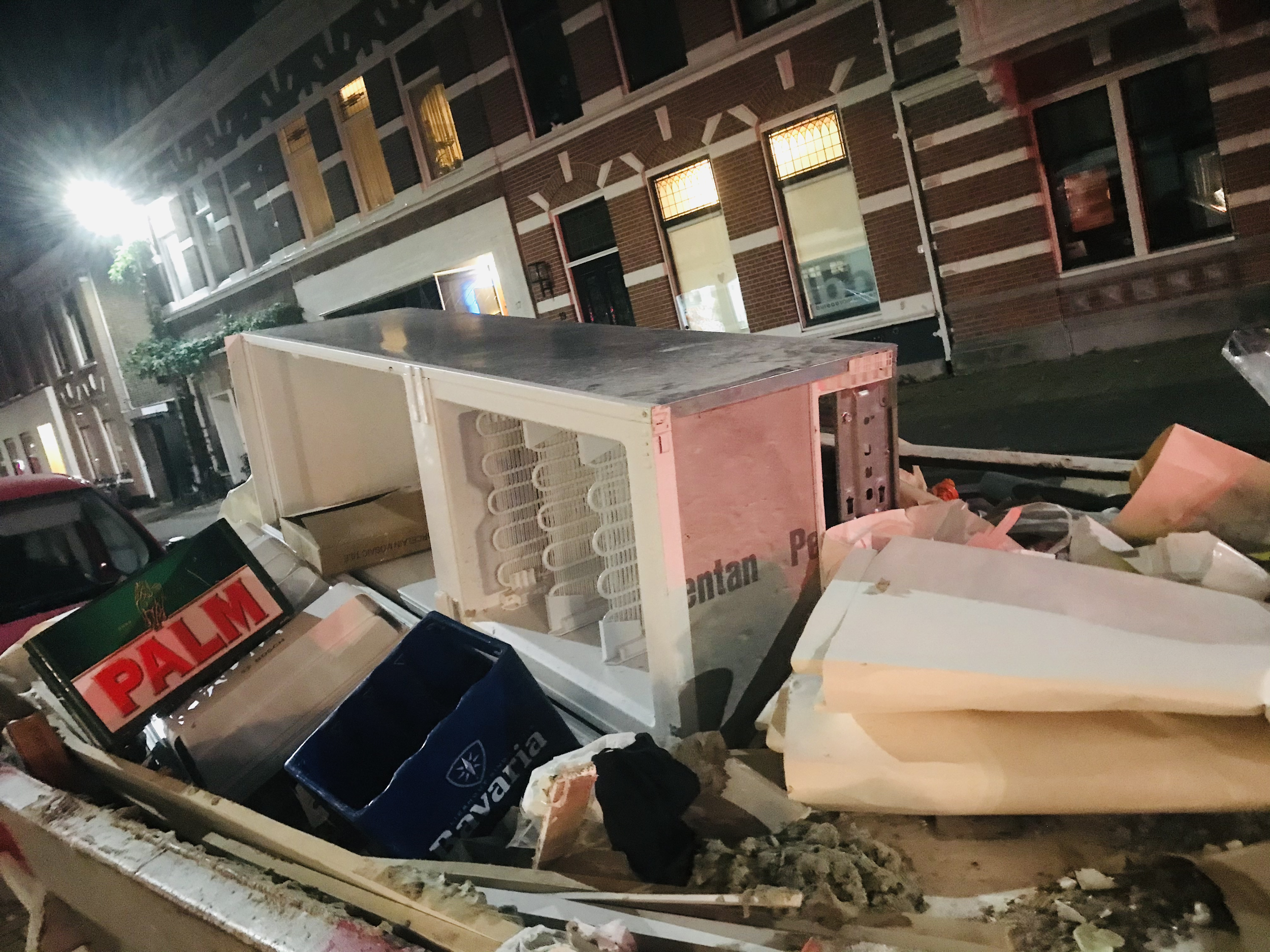
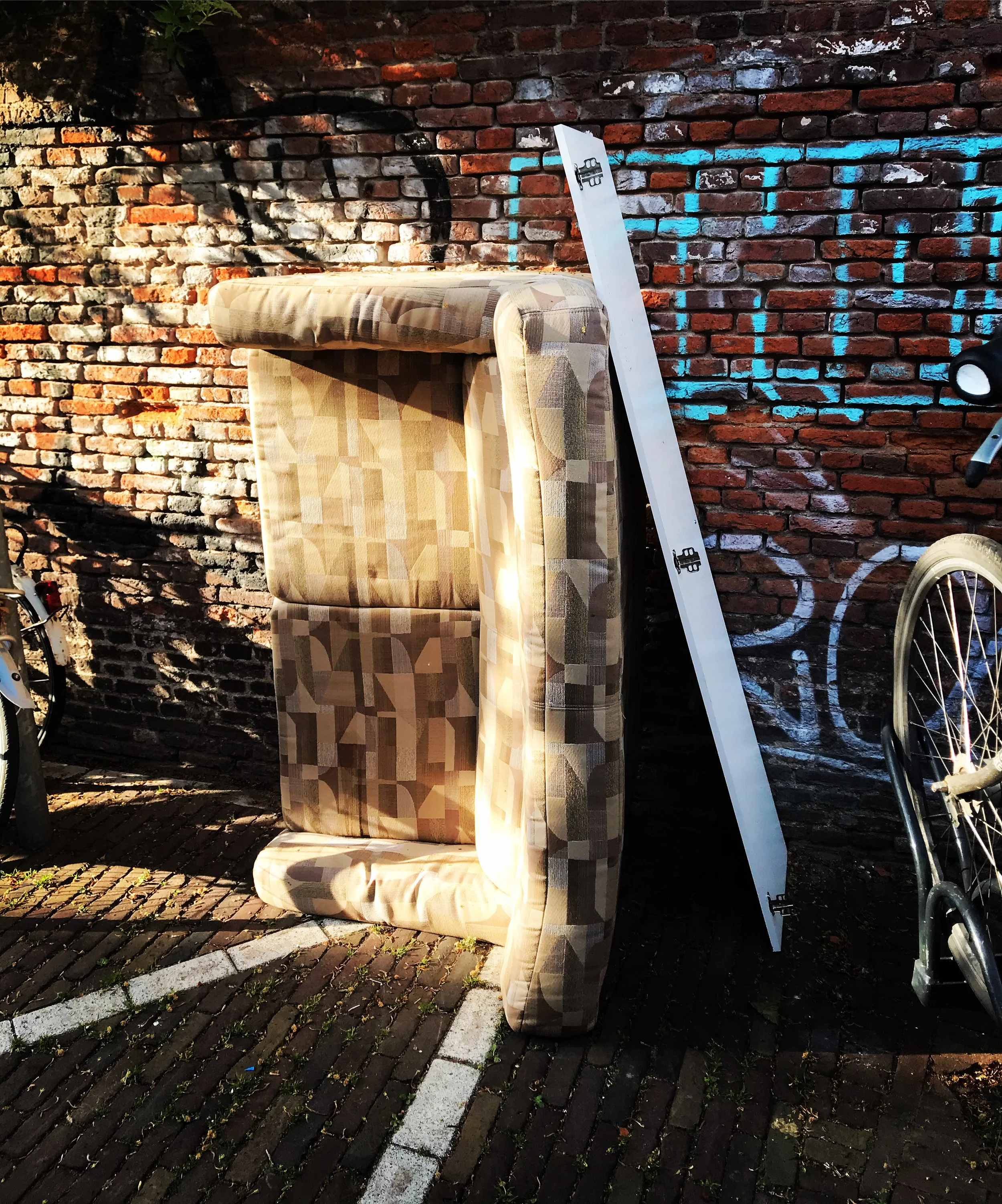
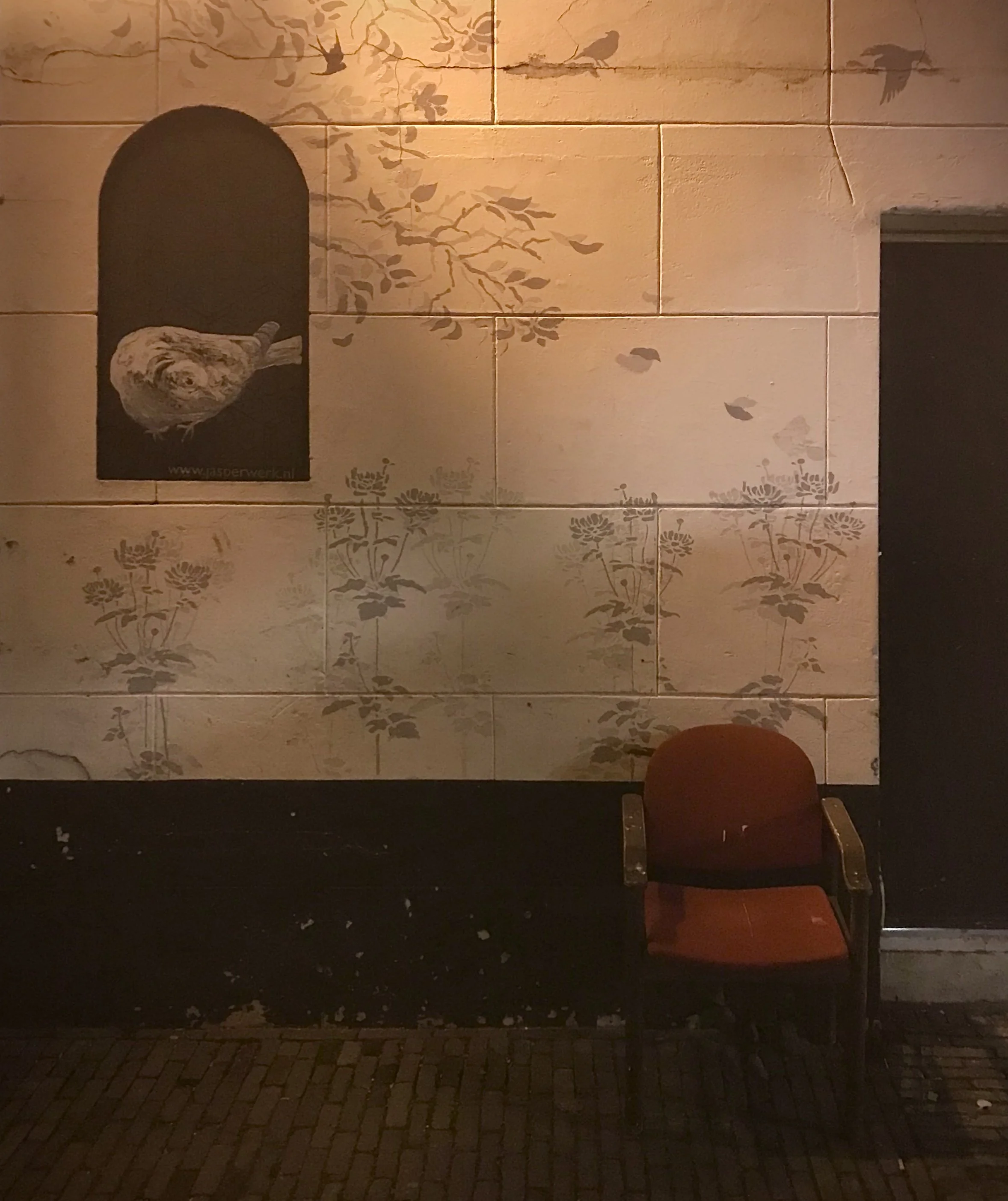
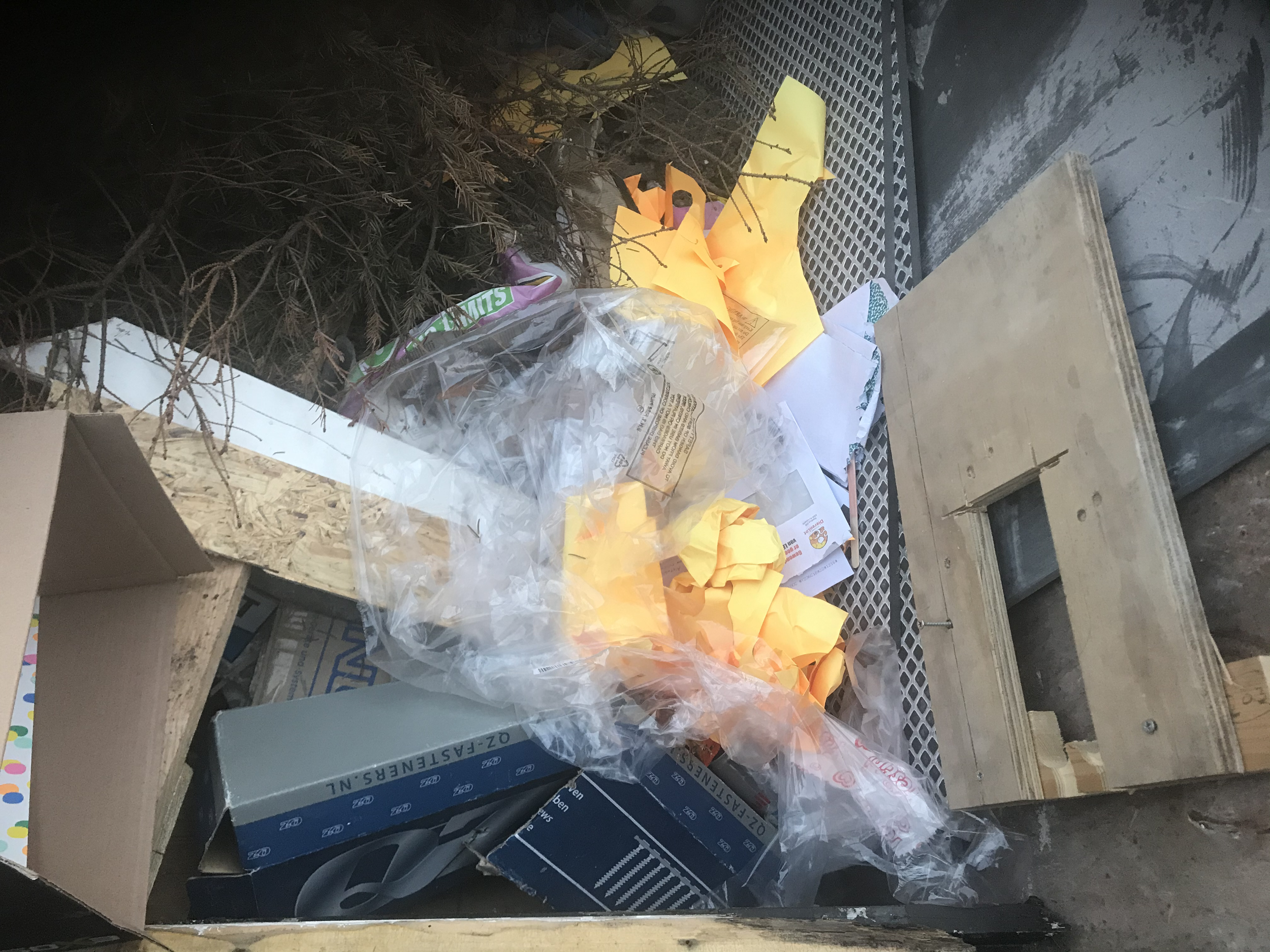
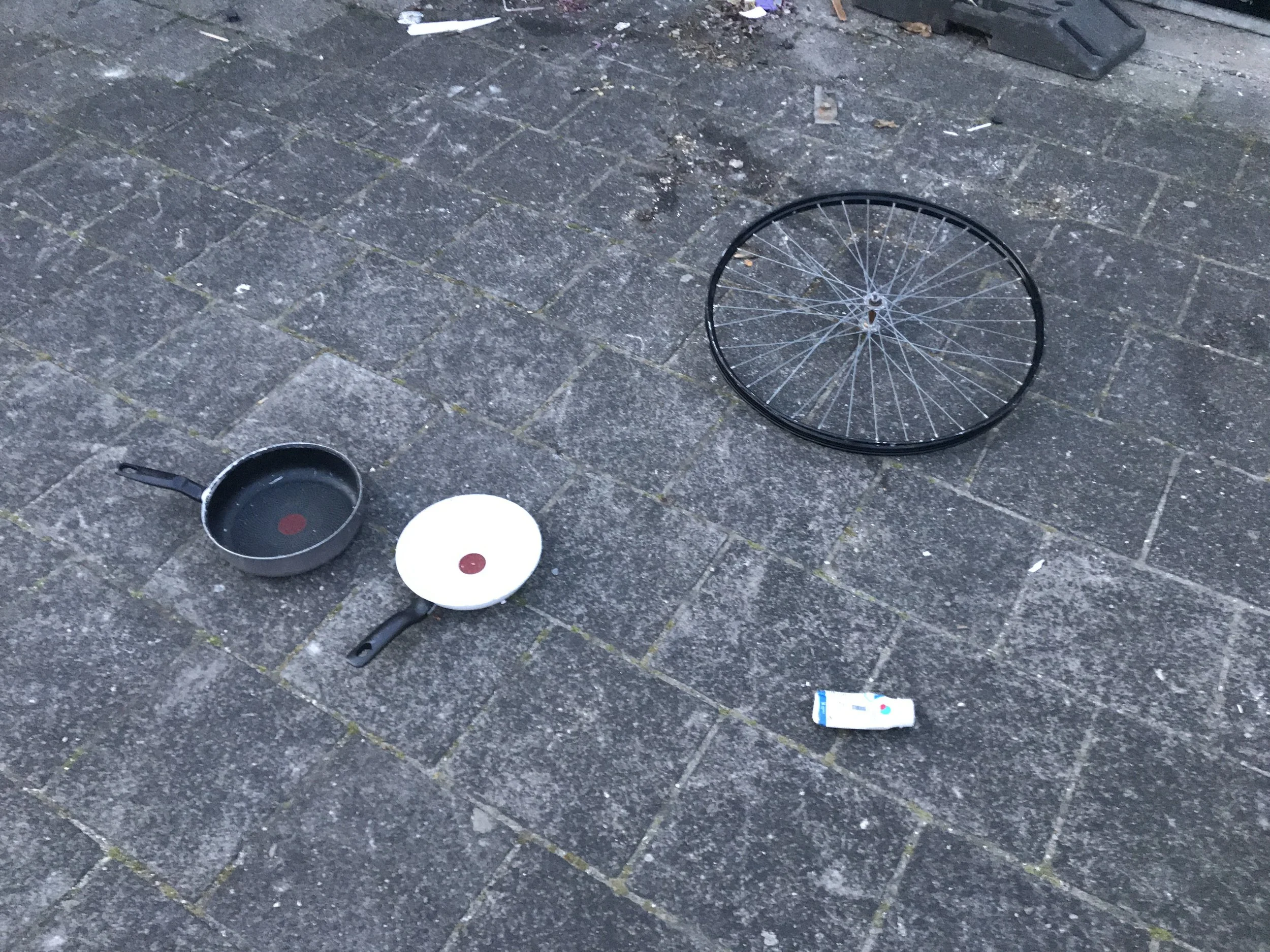
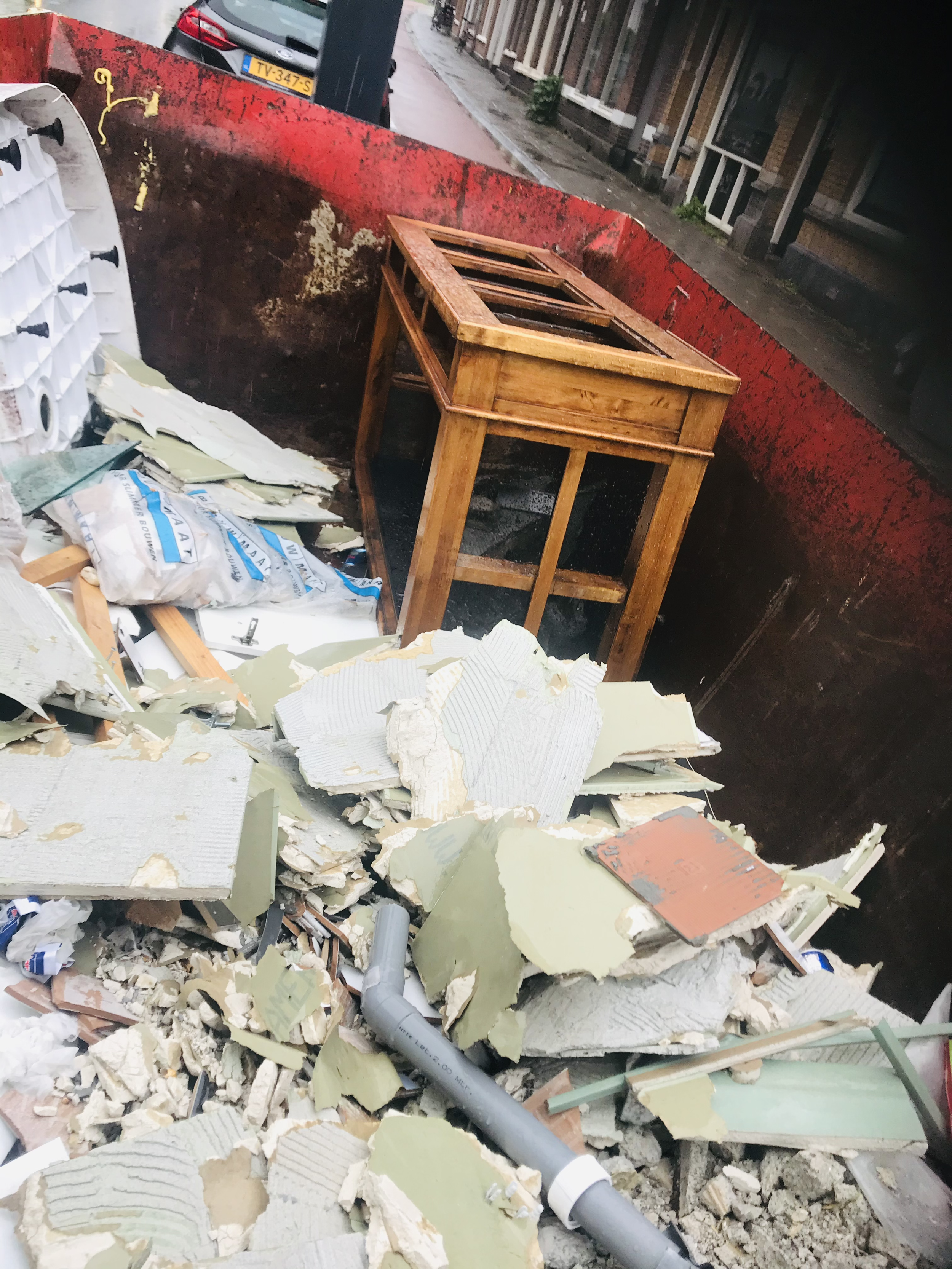
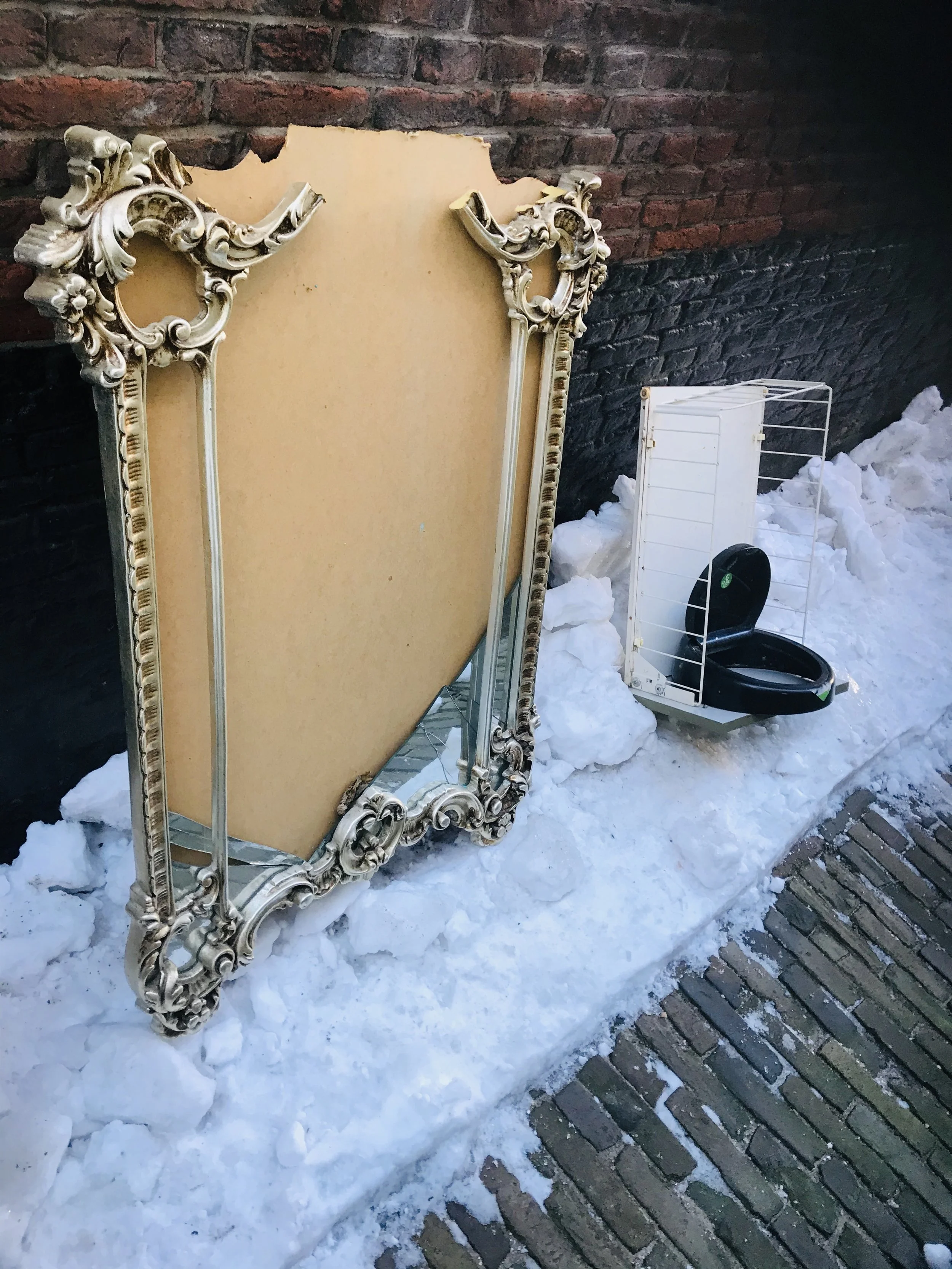
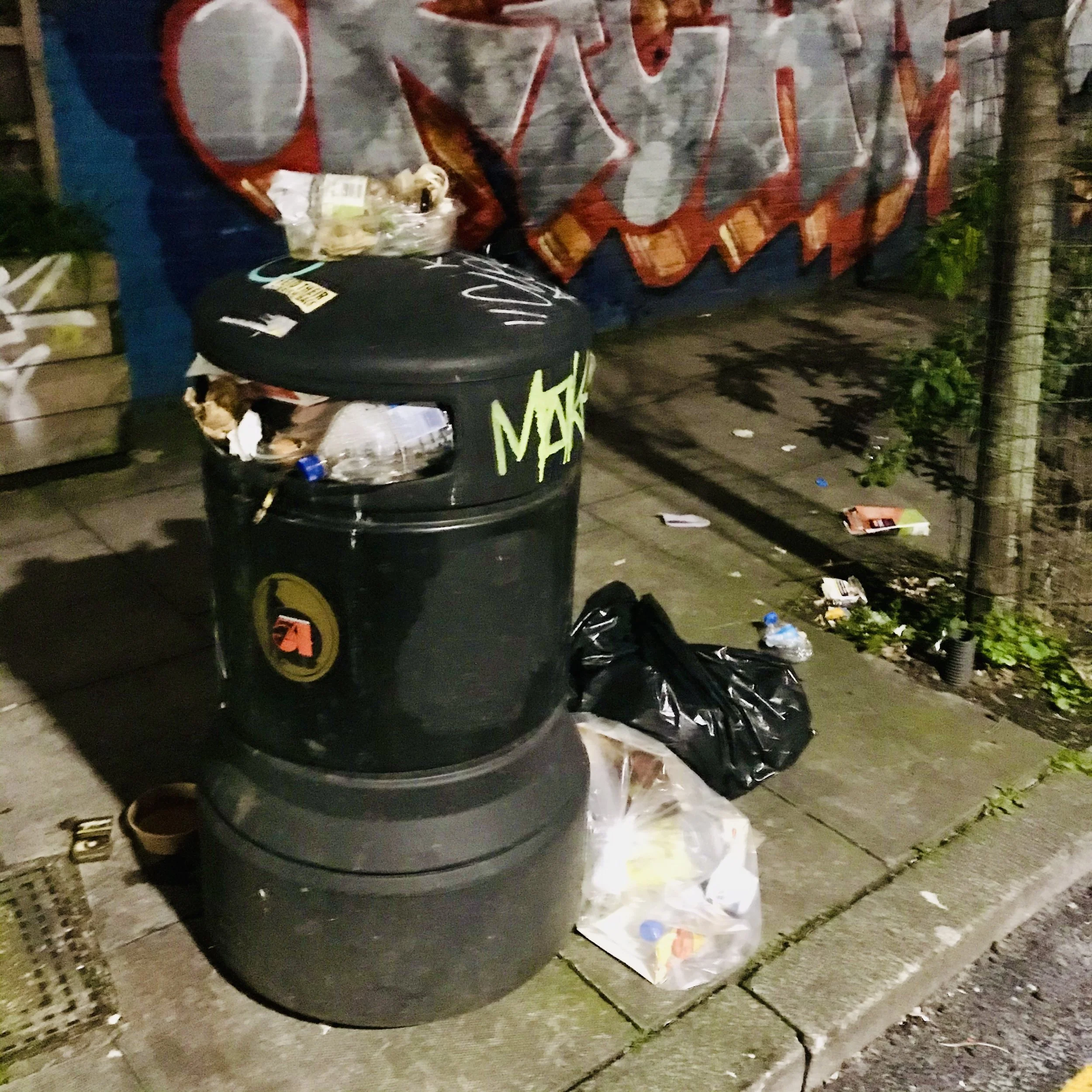
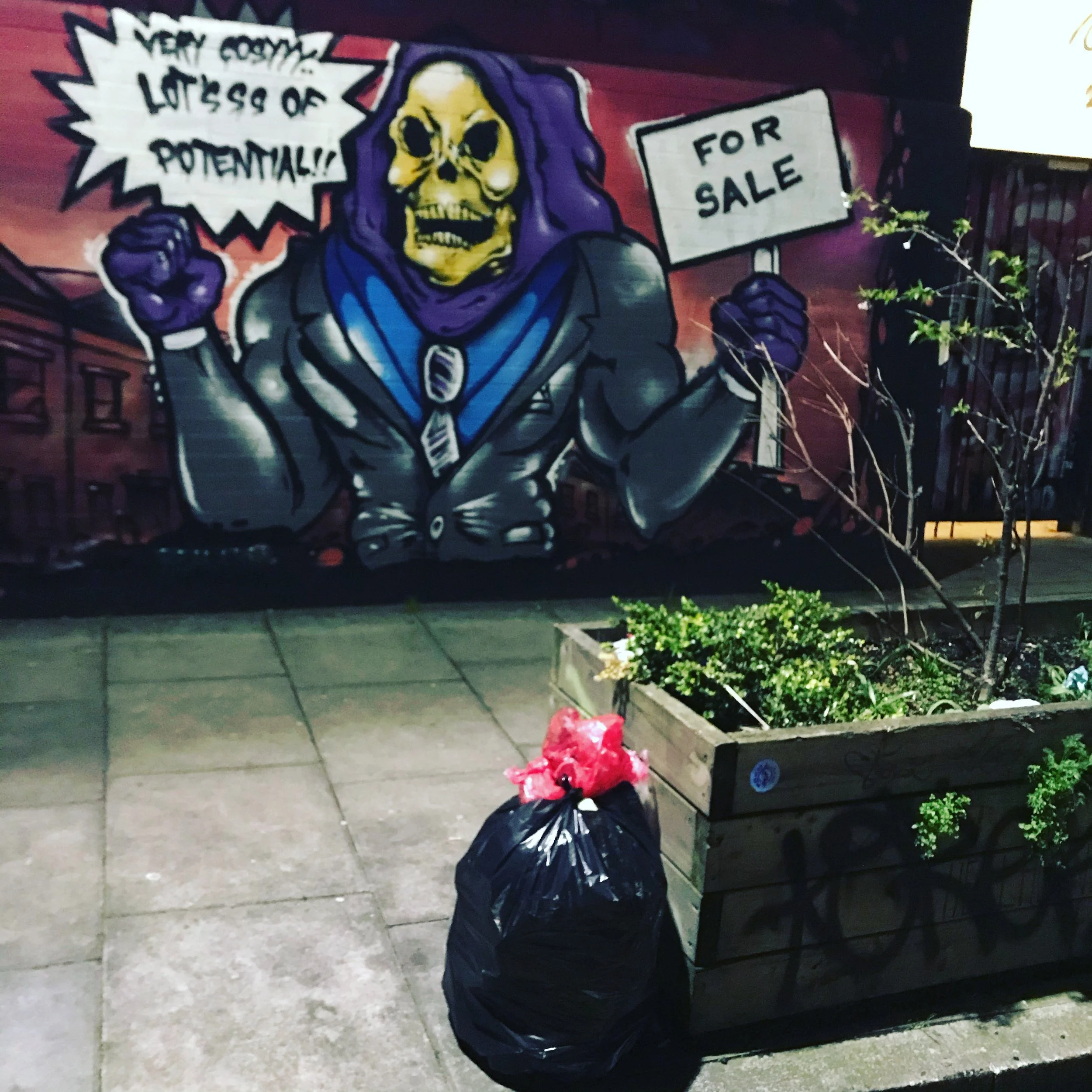
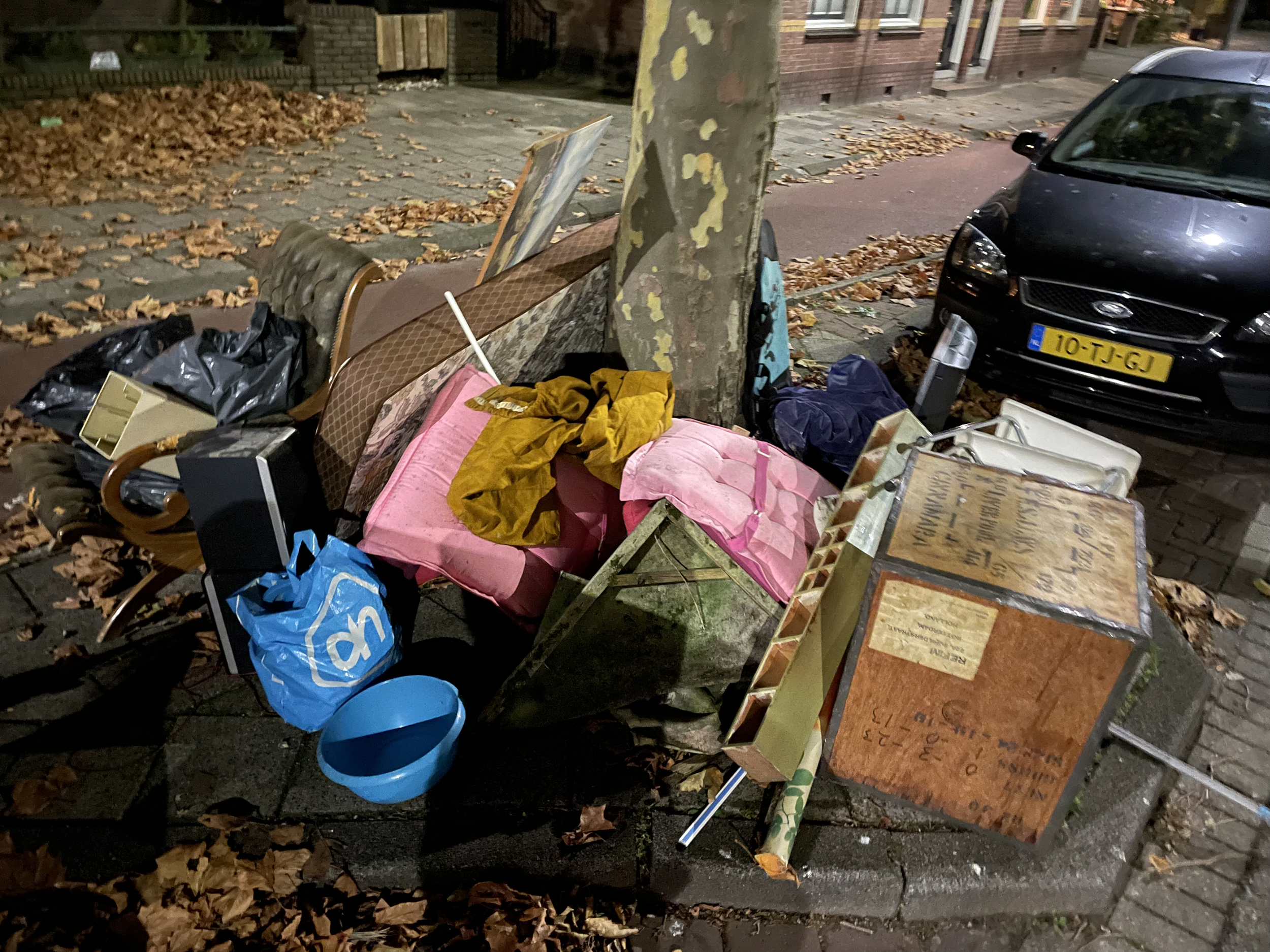
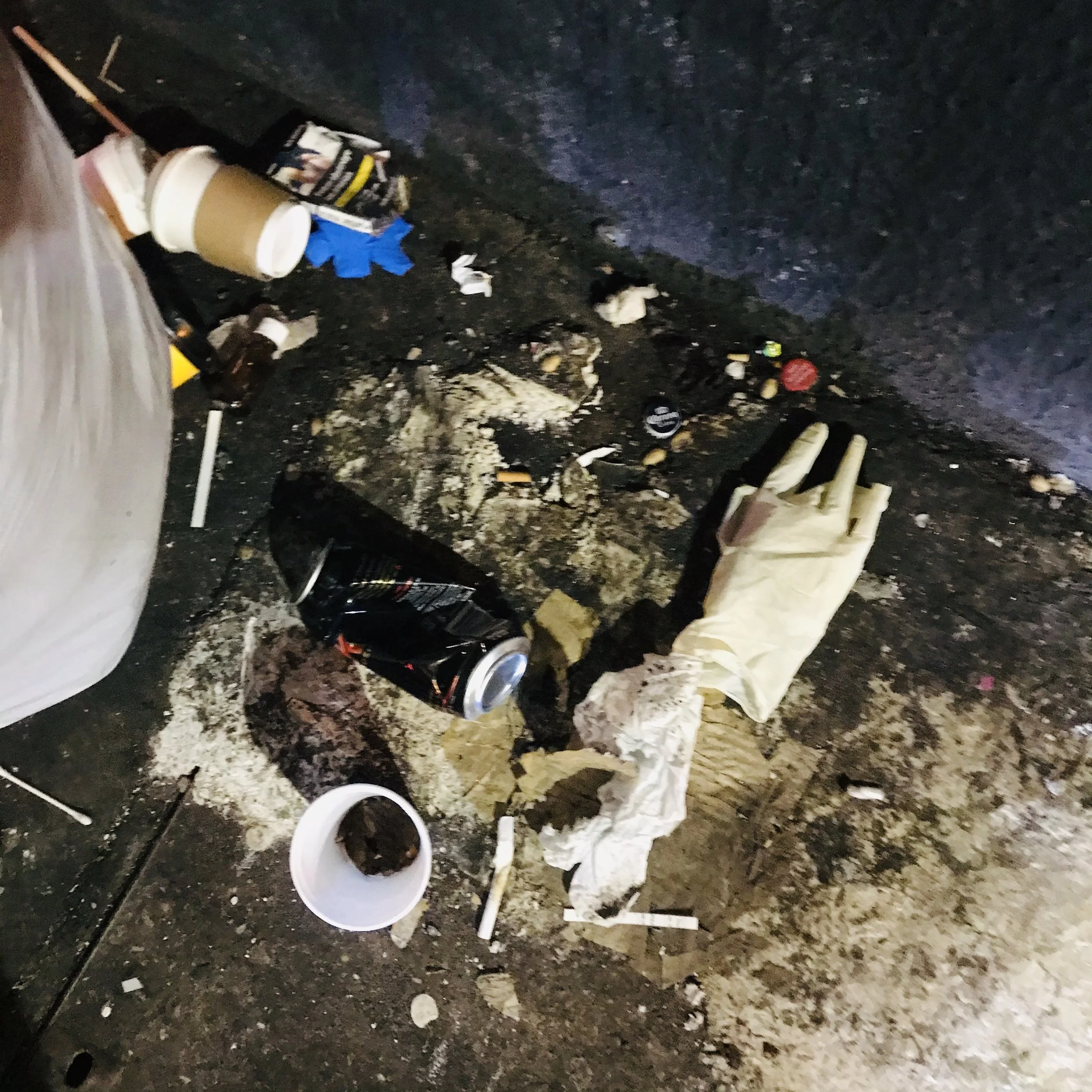
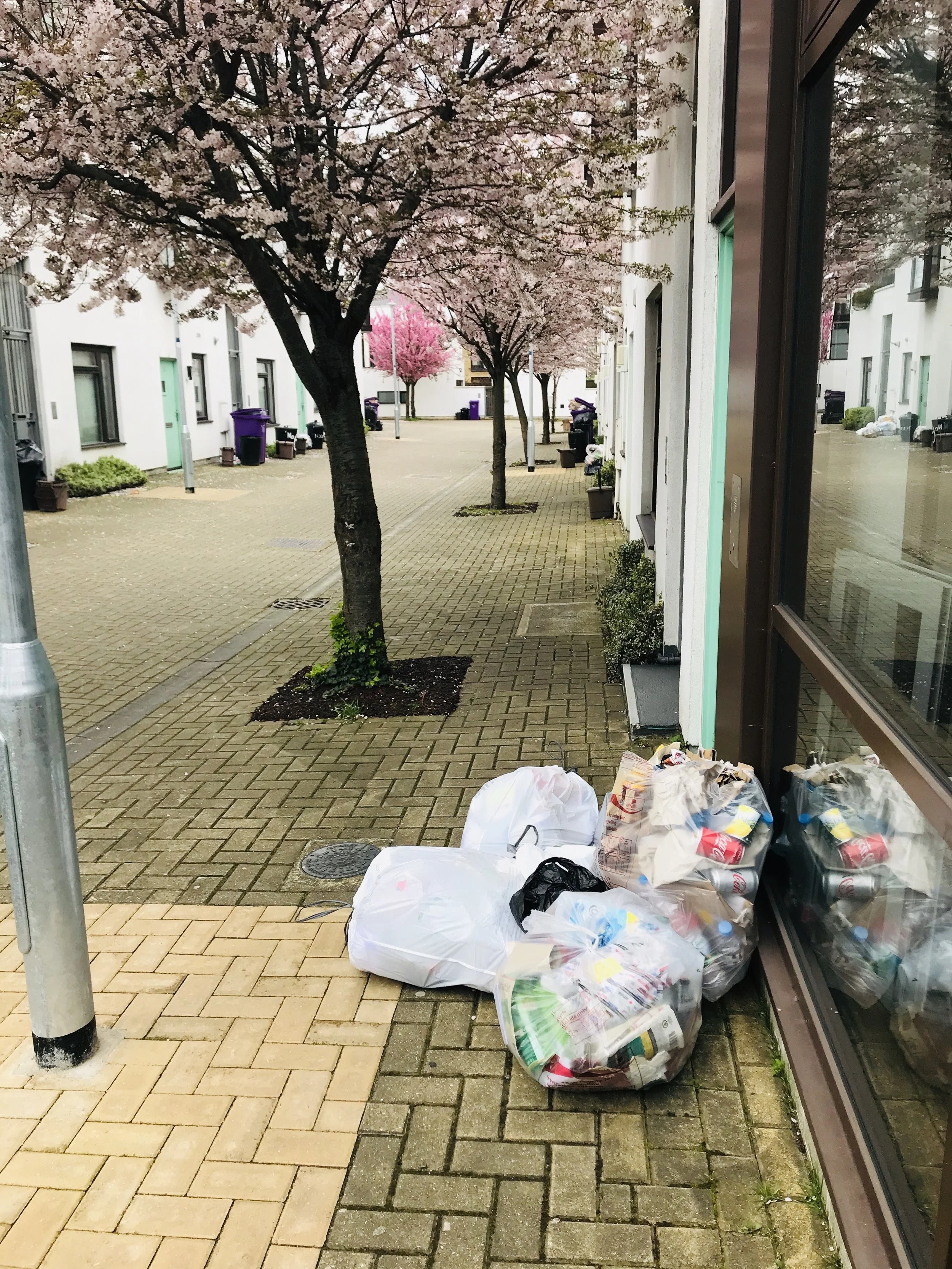
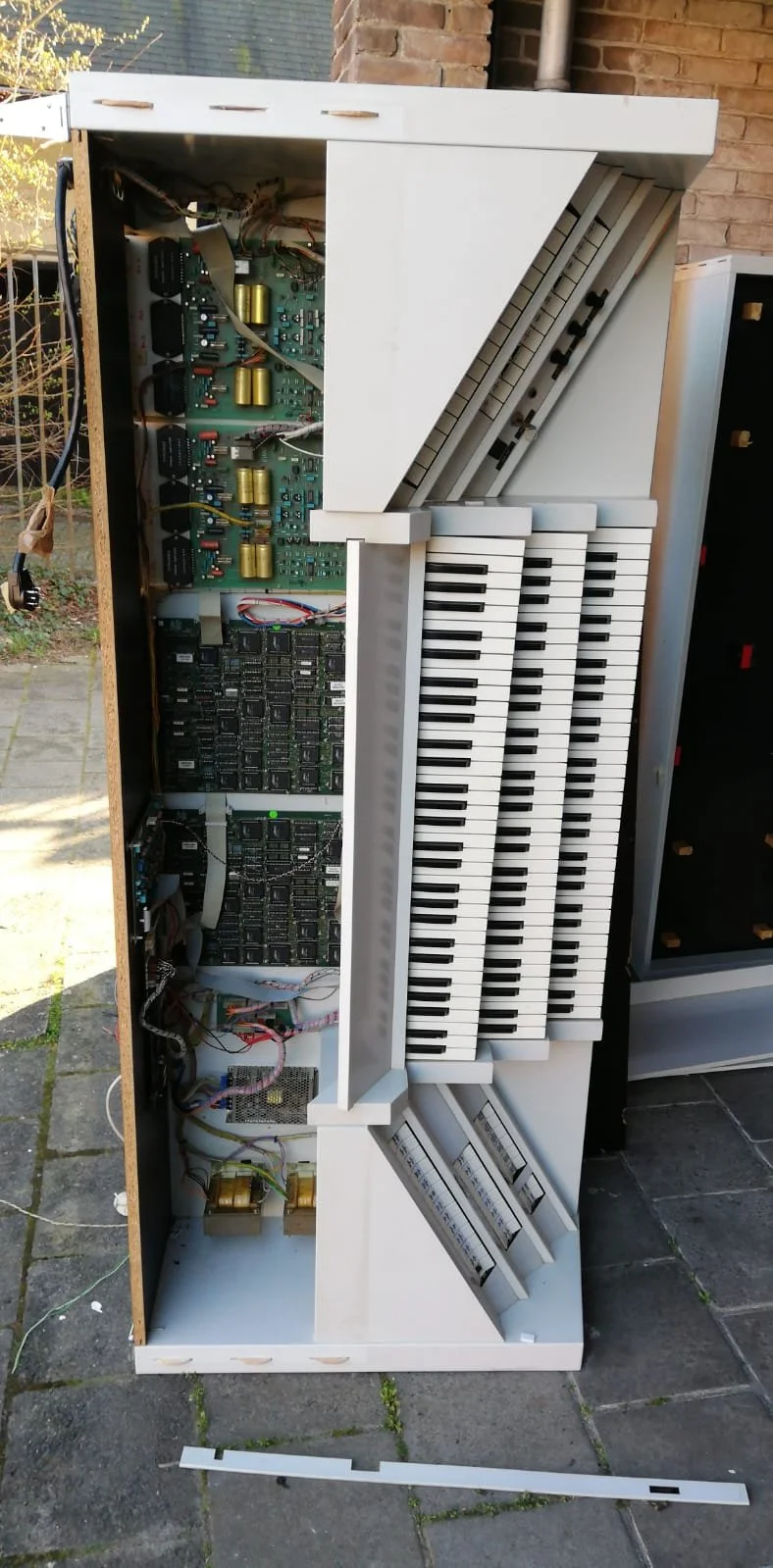
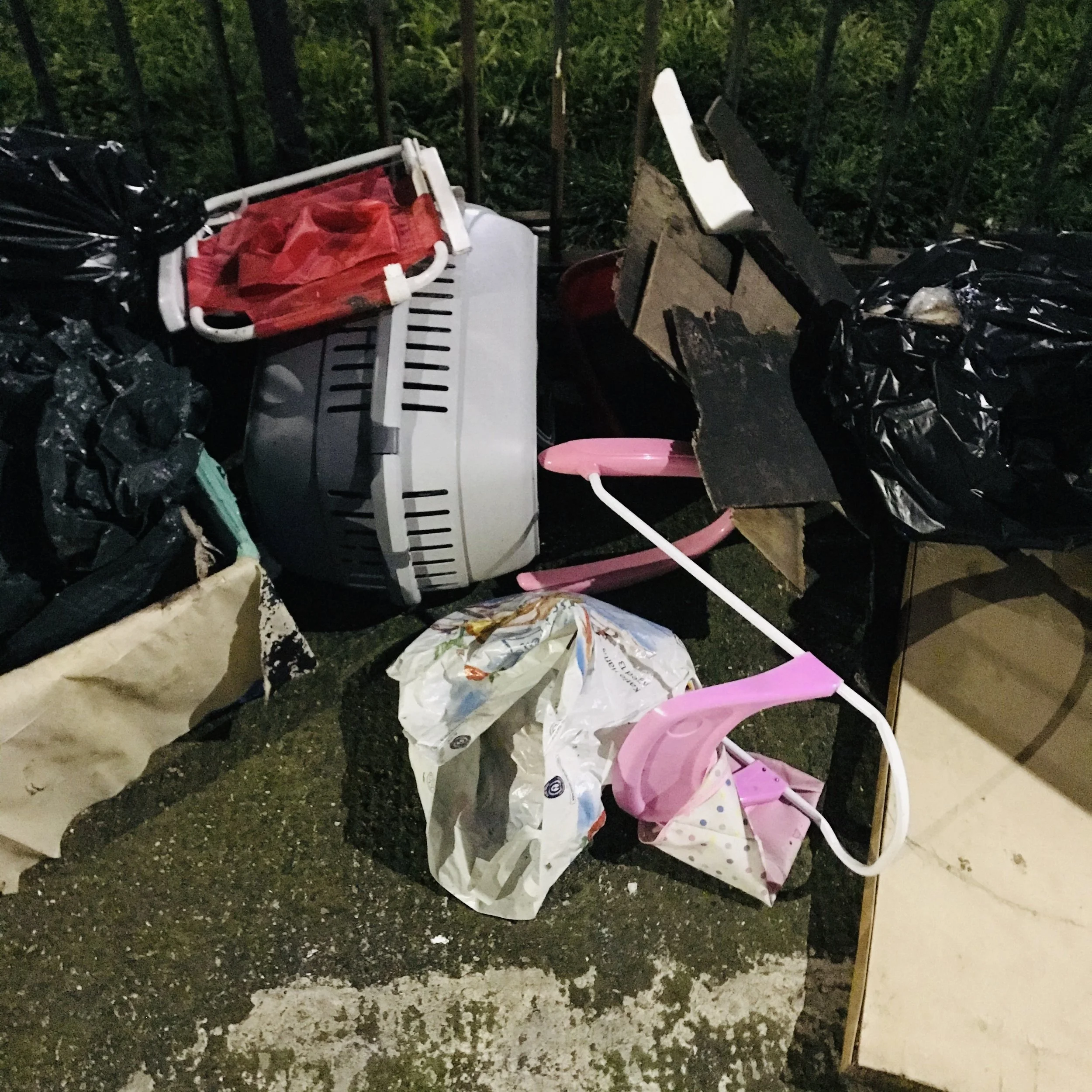
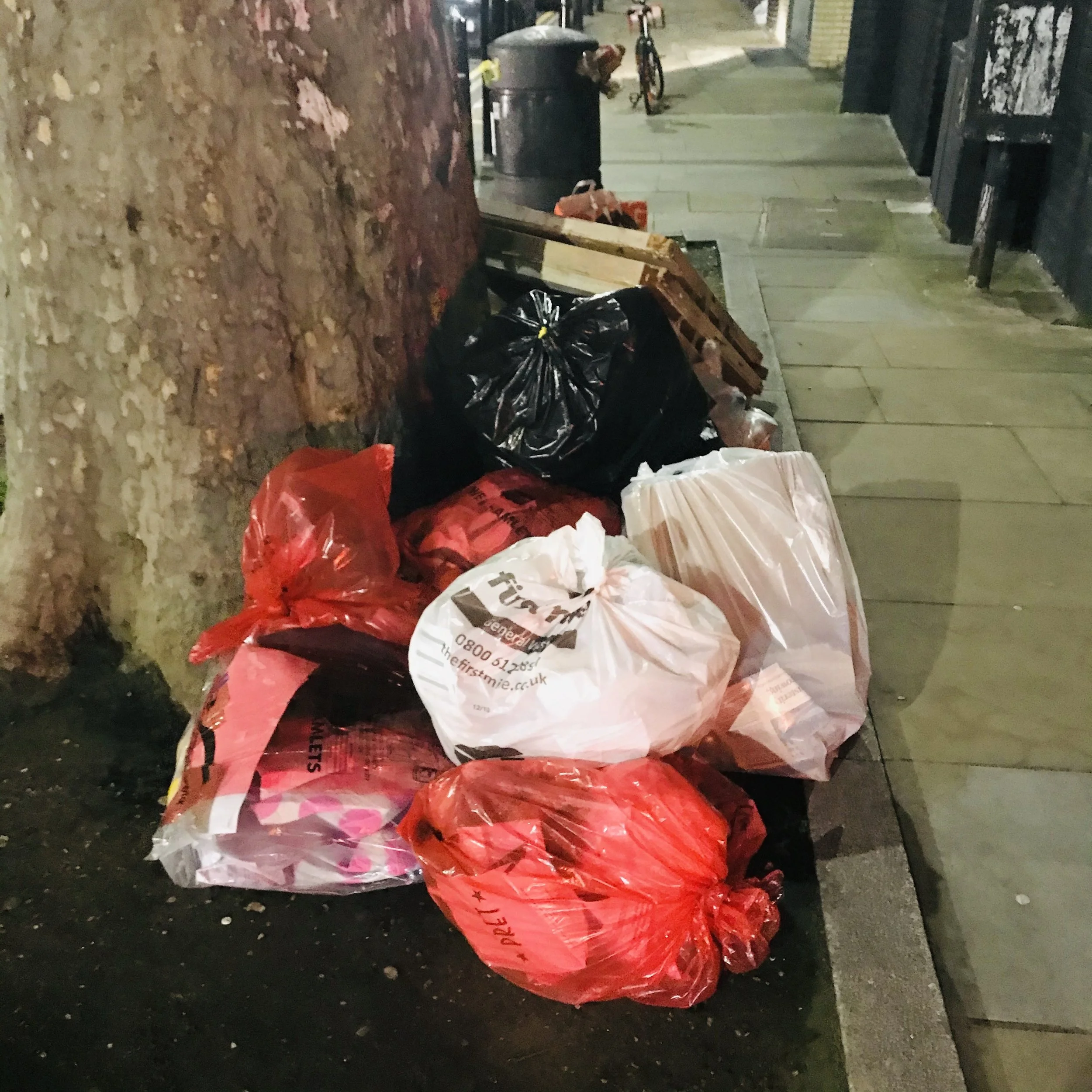
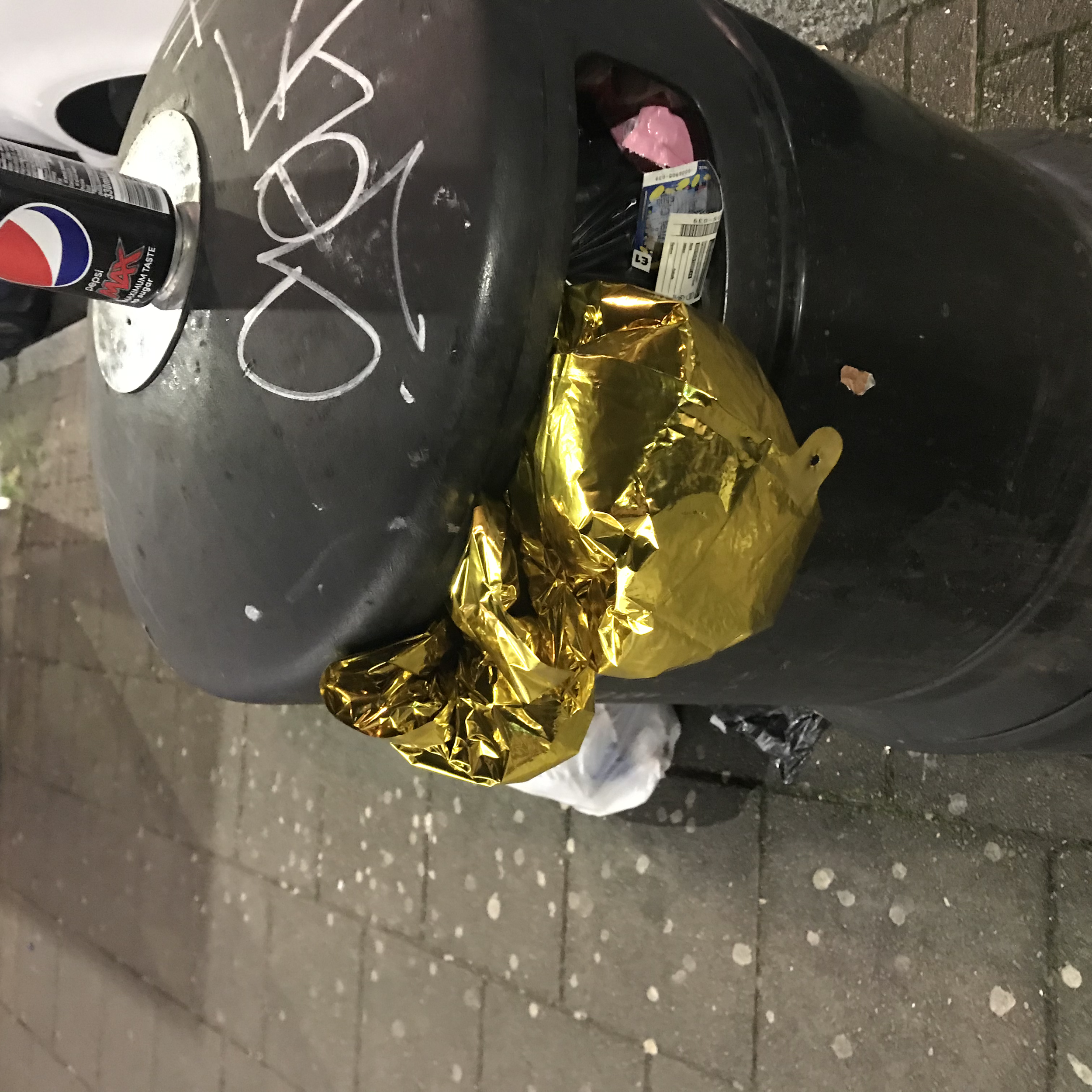
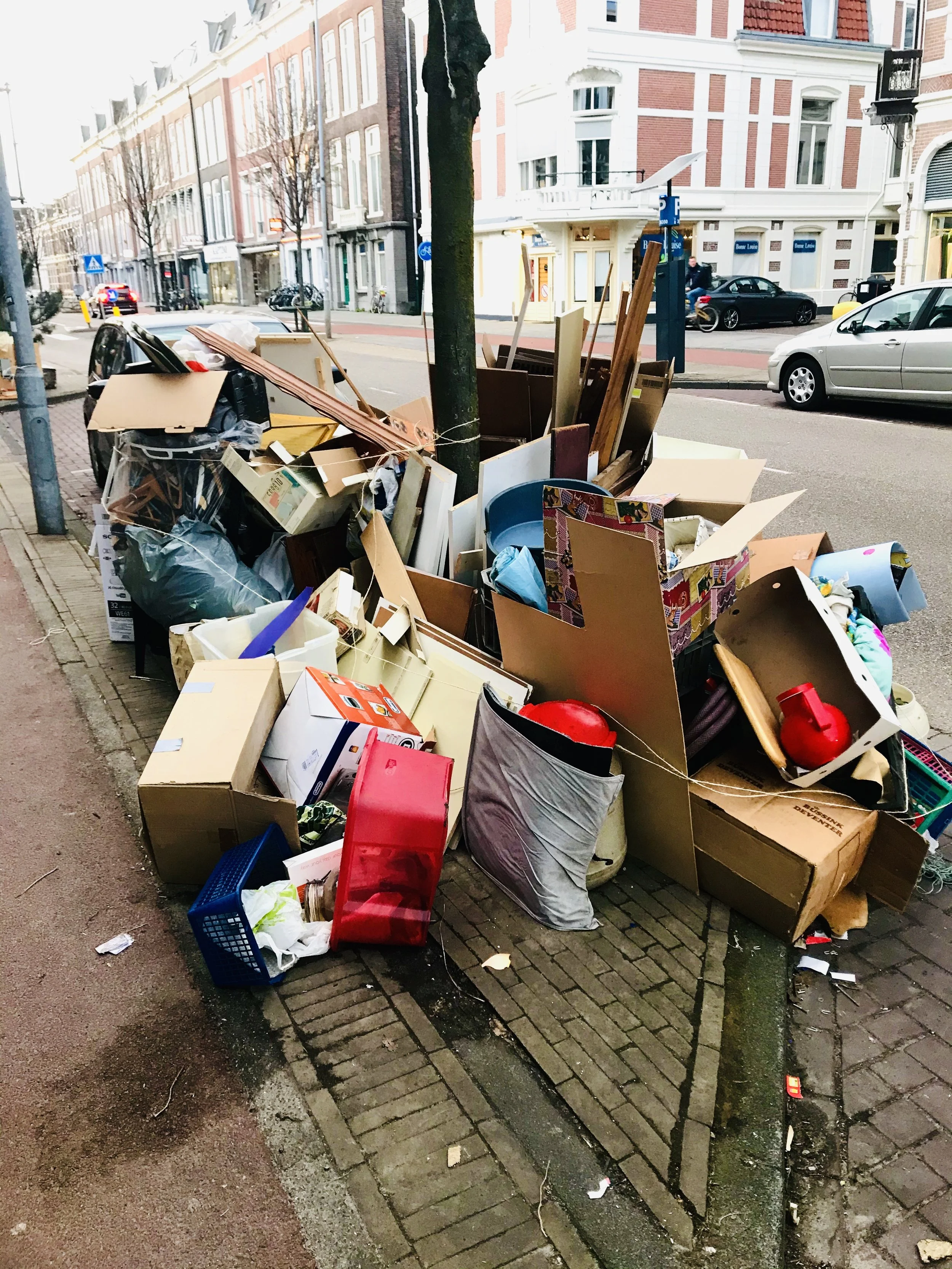
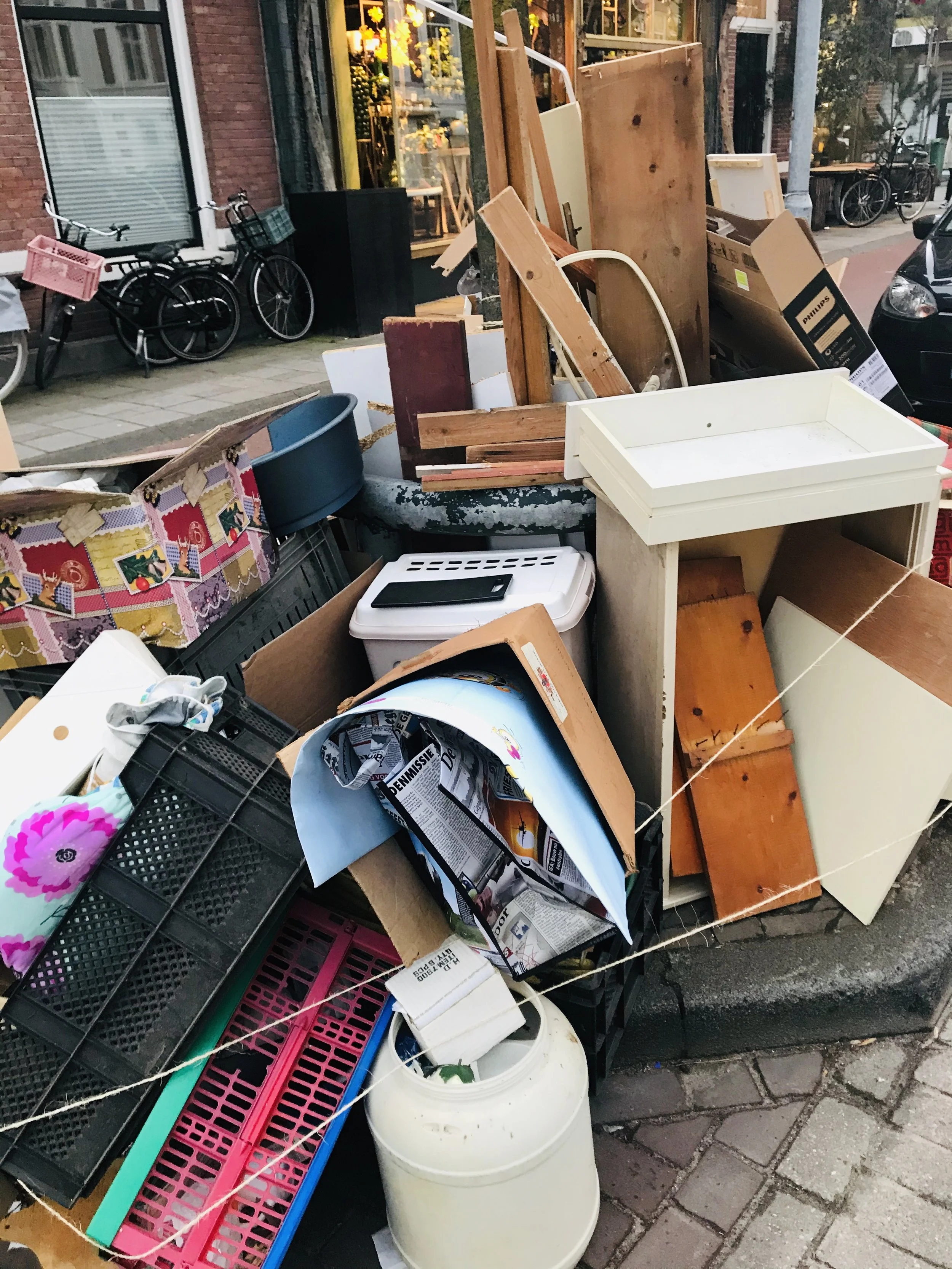
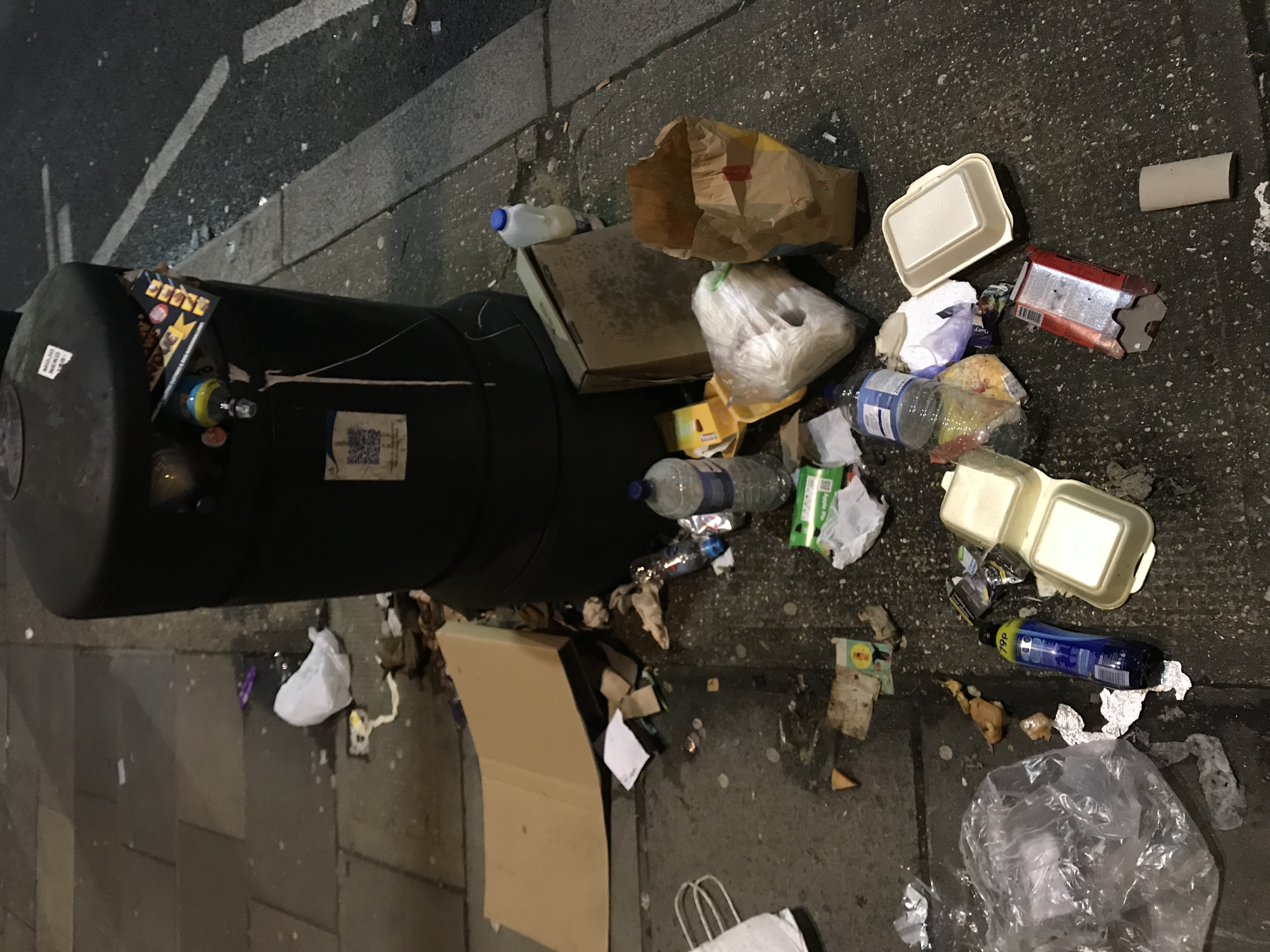
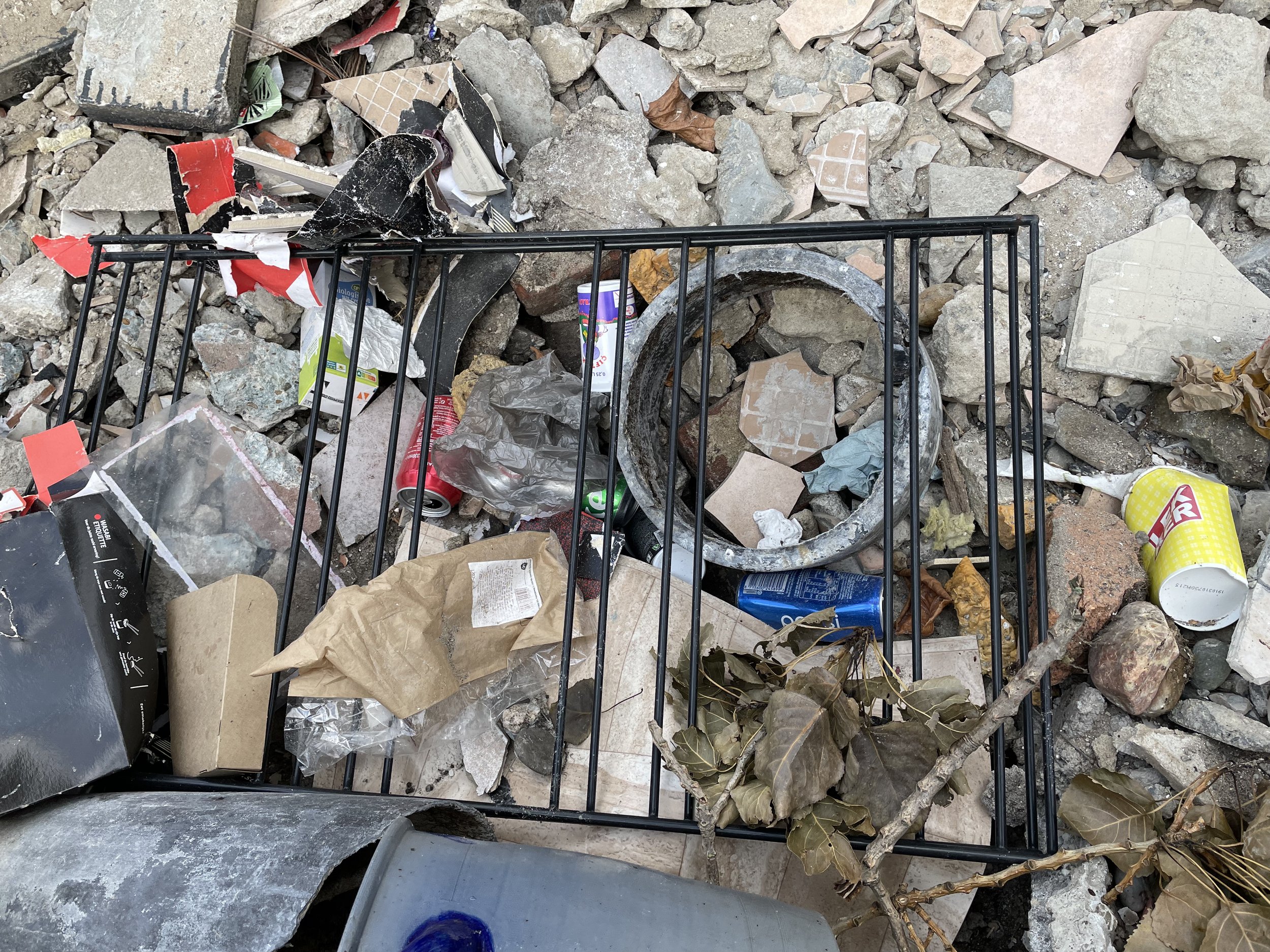
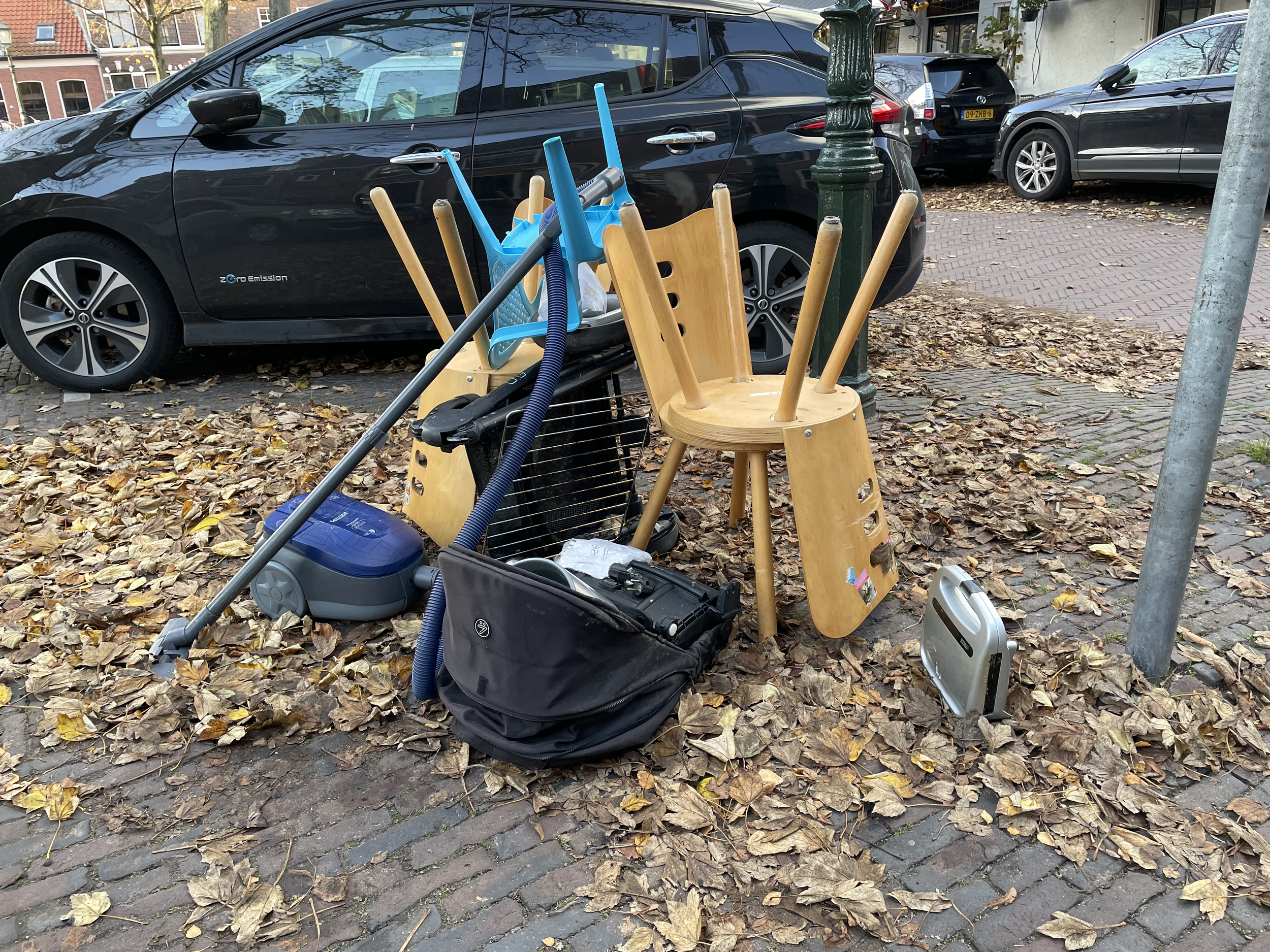
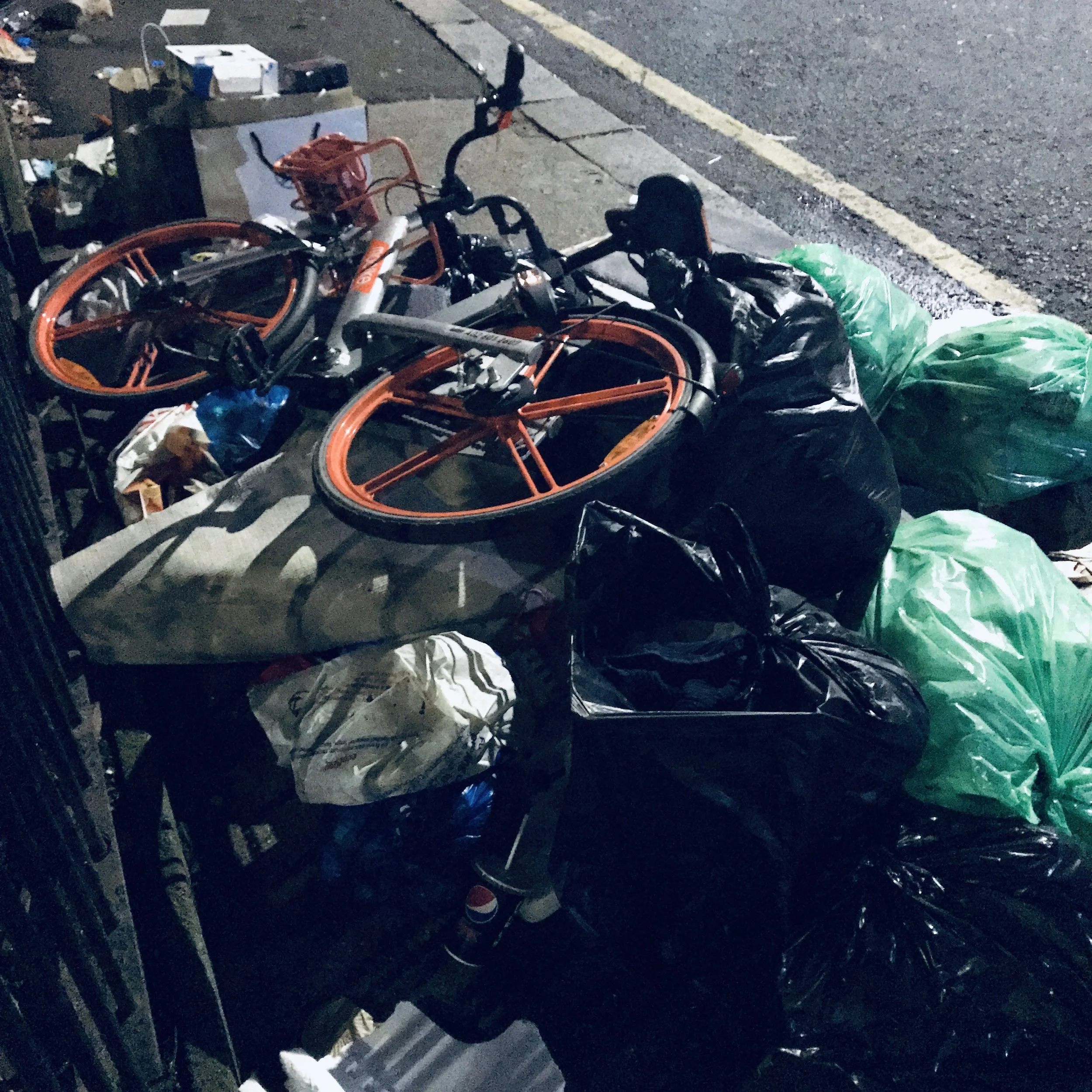
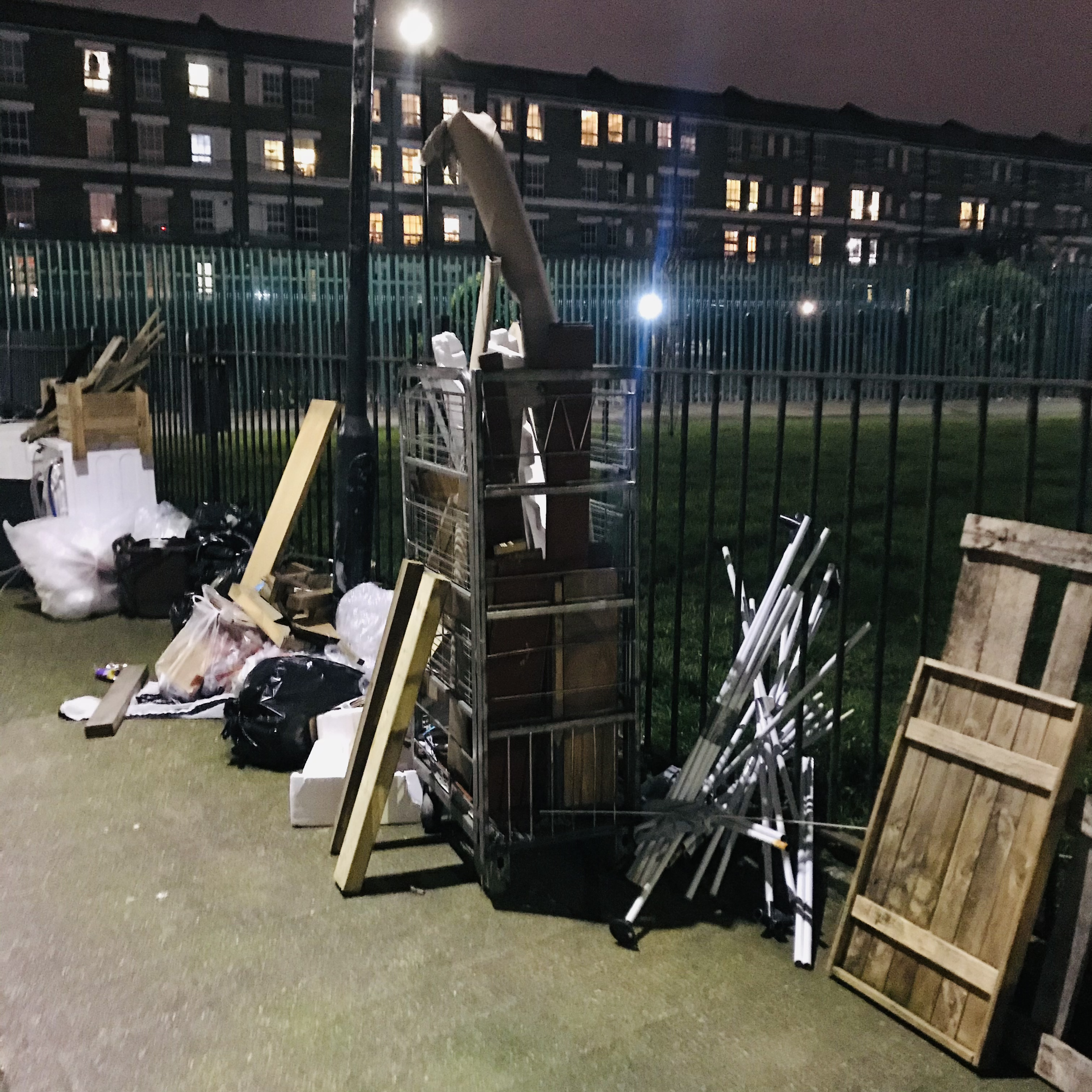
What began in 2014 as a photographic study of discarded trash on city streets; urban islands of excess blending into the everyday landscape , evolved in 2018 into a digital dialogue with classical 17th-century still life paintings. Once celebrated as symbols of wealth and cultural pride, these paintings often carried a hidden warning: do not cling to material goods, for everything is transient. By merging street trash with these historic still lifes, I confront the paradox of our time. Where once objects were prized possessions, today possessions often possess us. Beauty, decay, pride, and shadow collapse into a single frame inviting reflection on what we value, what we discard, and what ultimately remains.
Over 11 years, I photographed more than 20,000 traces of what we leave behind, fragments that mirror our age of speed and disconnection. Street debris has become part of the urban skin, silently reflecting how far we’ve drifted from nature, from each other, and from ourselves. Get a glimpse below of the Poetry of what remains.
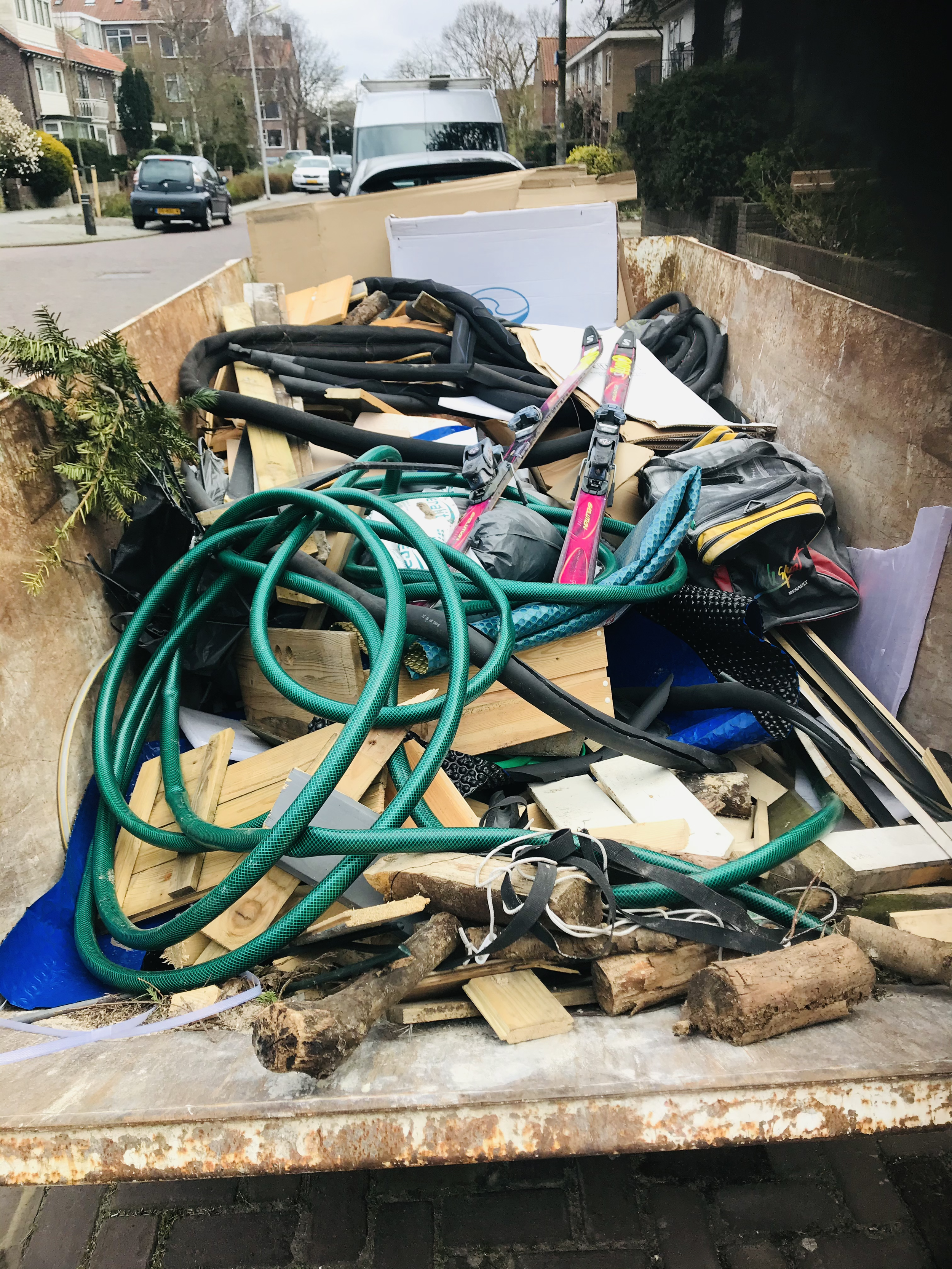
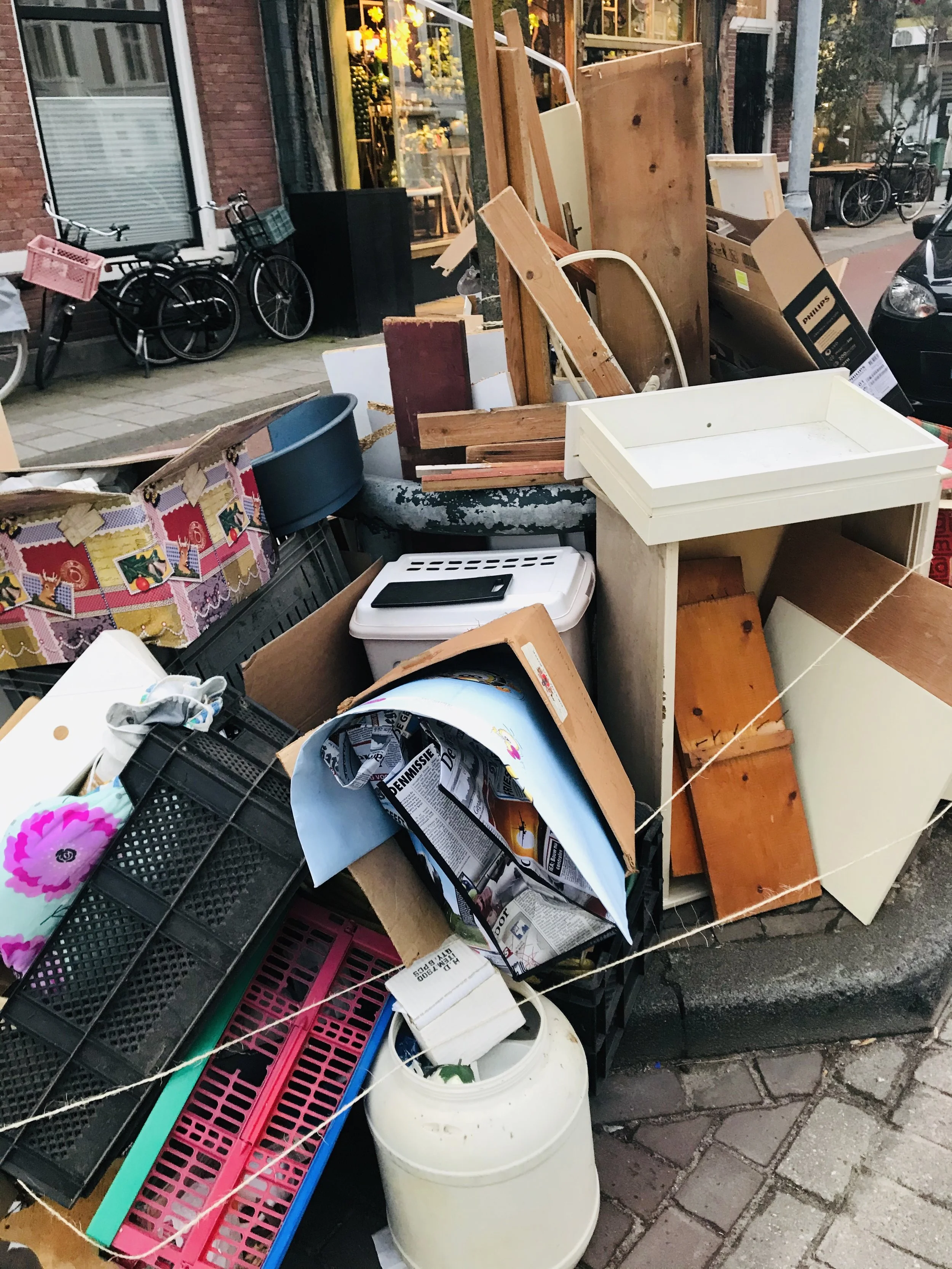
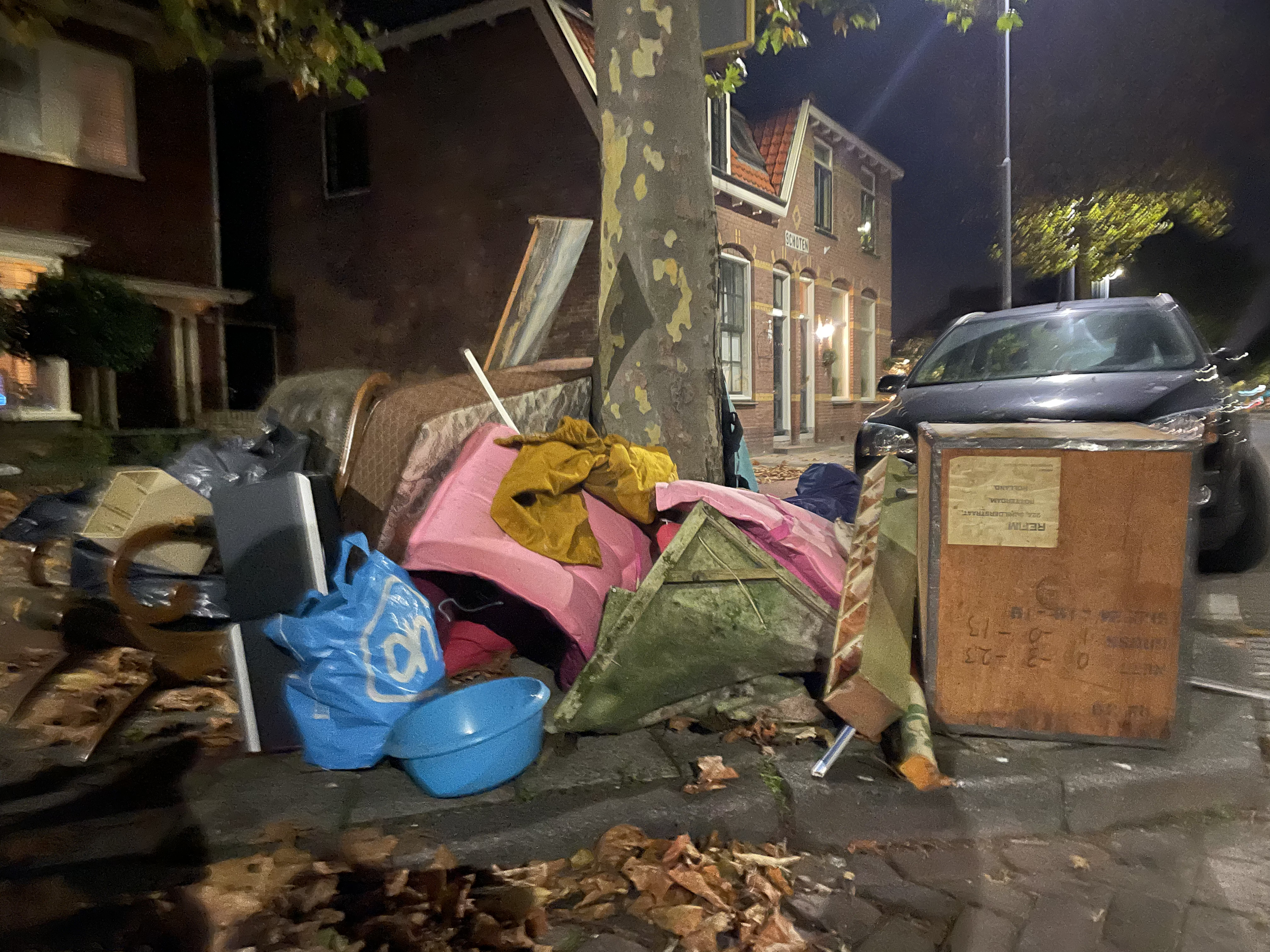
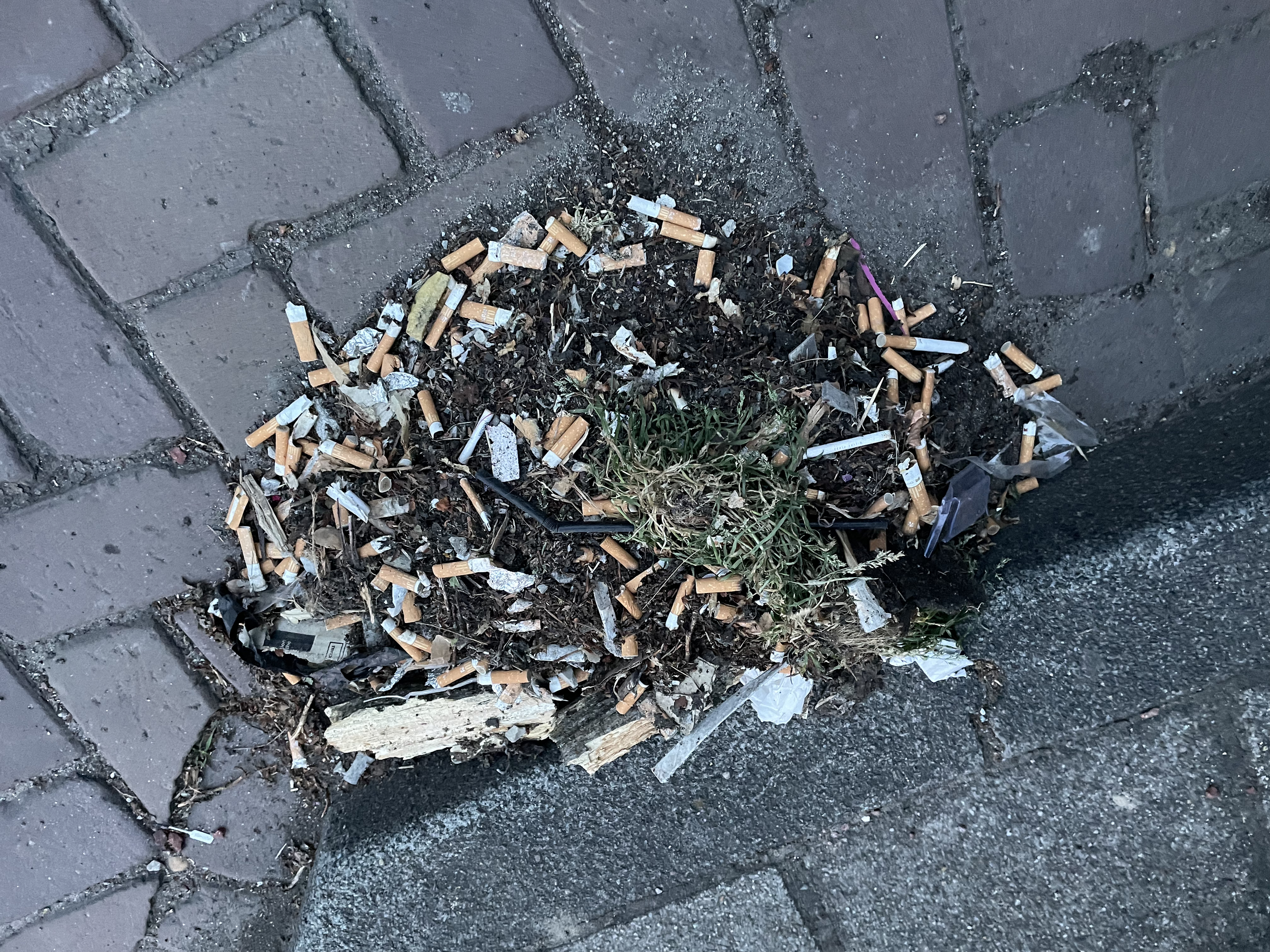
Trash Bouquet
NL
Trash Bouquet
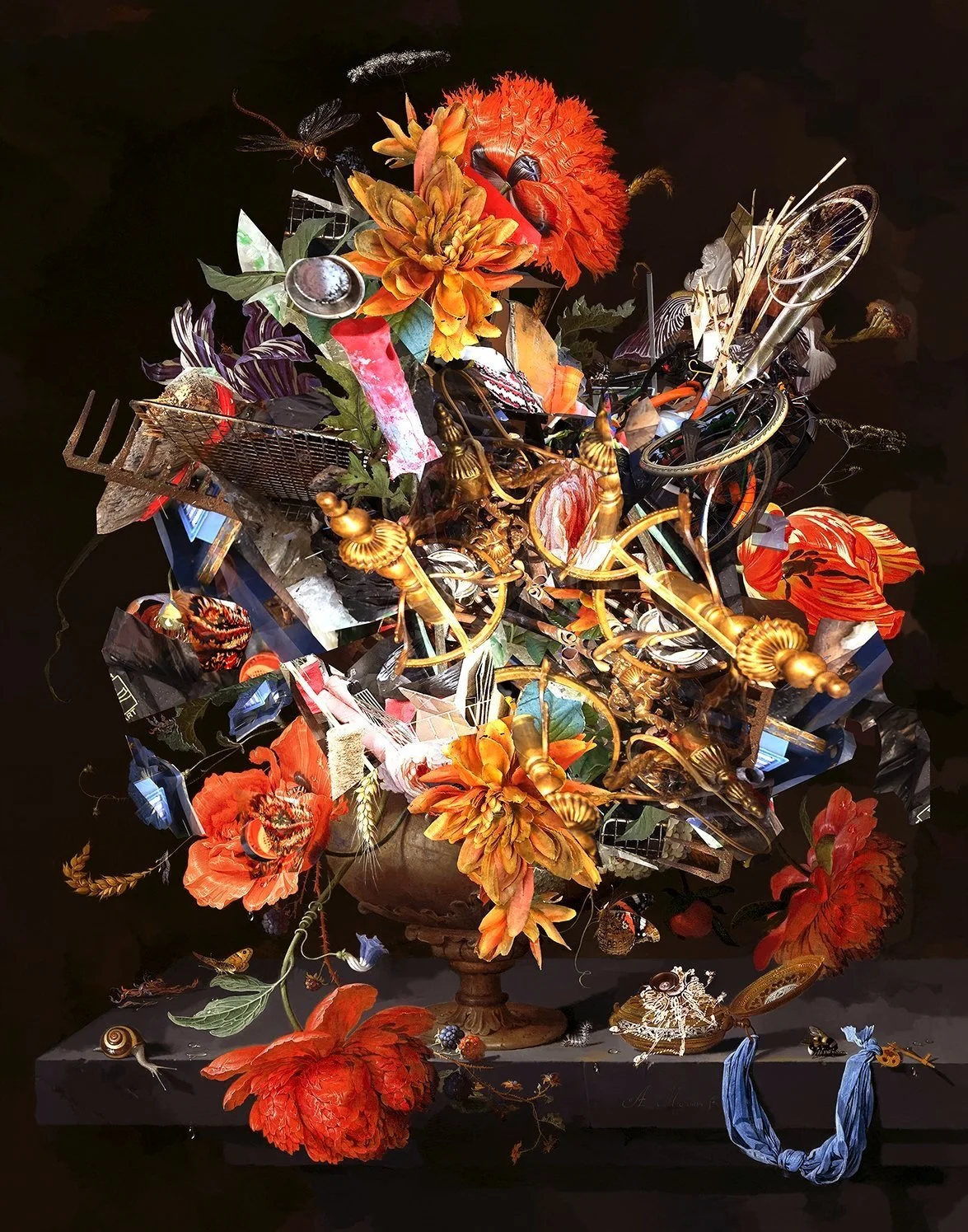
Gebaseerd op het werk van Abraham Mignon: Stilleven met bloemen en een horloge (1660 – 1679) Uit de serie: Van bezit naar bezeten van bezit
Trash Bouquet is een eigentijdse herinterpretatie van een 17e-eeuwse bloemstilleven; een genre waarin schoonheid en vergankelijkheid onlosmakelijk met elkaar verbonden zijn. Het werk maakt deel uit van de serie: Van bezit naar bezeten van bezit en was in 2024 vijf maanden te zien tijdens de tentoonstelling Bloom in museum Paleis Het Loo.
Wat op het eerste gezicht een klassiek boeket lijkt, verandert bij nader kijken in een zorgvuldig geconstrueerde samenstelling van hedendaags stedelijk straatafval, vluchtige materialen en sporen van tijdelijk bezit, vervlochten met een weelderig bloemstilleven van Abraham Mignon. Elegantie botst hier met de huidige consumptiecultuur. Een cultuur die lijdt aan verlies van betekenis en tegelijk zichtbaar maakt hoe verstoord onze relatie met de natuur is, maar ook hoe ver wij verwijderd zijn geraakt van ons ware zelf en van elkaar.
Trash Bouquet onderzoekt afval niet alleen als materiële rest, maar ook als spiegel van wat wij collectief wegdrukken, negeren of uitbesteden. Waar het barokke stilleven ooit rijkdom en overvloed vierde met een fluistering over vergankelijkheid, laat dit werk zien hoe bezit in onze tijd is verschoven naar obsessie.
Achter de schone schijn van het kapitalisme ligt een wereld van letterlijke en figuurlijke troep verborgen. Het werk nodigt uit tot reflectie:
Wat is bezit werkelijk waard? Wie ben je zonder je bezit/spullen? Wat blijft wanneer de schijn verdwijnt? Wat laat je achter, zichtbaar en onzichtbaar?
ENG
This artwork is part of my series From Possessed to possessed by Possessions, and was exhibited at Royal Palace Het Loo ( museum) for 5 months in 2024. It digitally reimagines a floral still life by 17th-century painter Abraham Mignon an artist known for his richly detailed flower compositions and hidden moral undertones.
In Trash Bouquet, the elegance of the classical still life is confronted with the raw reality of contemporary urban waste. What first appears as a bouquet reveals itself, on closer inspection, to be a carefully composed collage of discarded materials photographed piles of street trash digitally merged with Mignon’s floral composition.
The work explores “trash” both literally and figuratively: as the physical leftovers of consumer culture, and as a symbol of what we suppress, ignore, or discard in ourselves. These flower paintings once celebrated beauty, wealth, and fleeting natural abundance but they also whispered of impermanence.
Today, we are no longer simply surrounded by possessions: we are possessed by them. Trash Bouquet invites a moment of reflection: What do we value? What do we throw away? And what hidden messages bloom from the things we’d rather not see?
AVAILABLE SIZES
Still Life - Trash Bouquet
Based on the work of Abraham Mignon ca. 1660 - 1679
Small 55 cm x 70 cm Edition of 10
Medium 90 cm x 115 cm Edition of 10
Large 110 cm x 140 cm Edition of 10
Larger size on request
Art Paper print with white border
Actual print size 40 cm x 51 cm
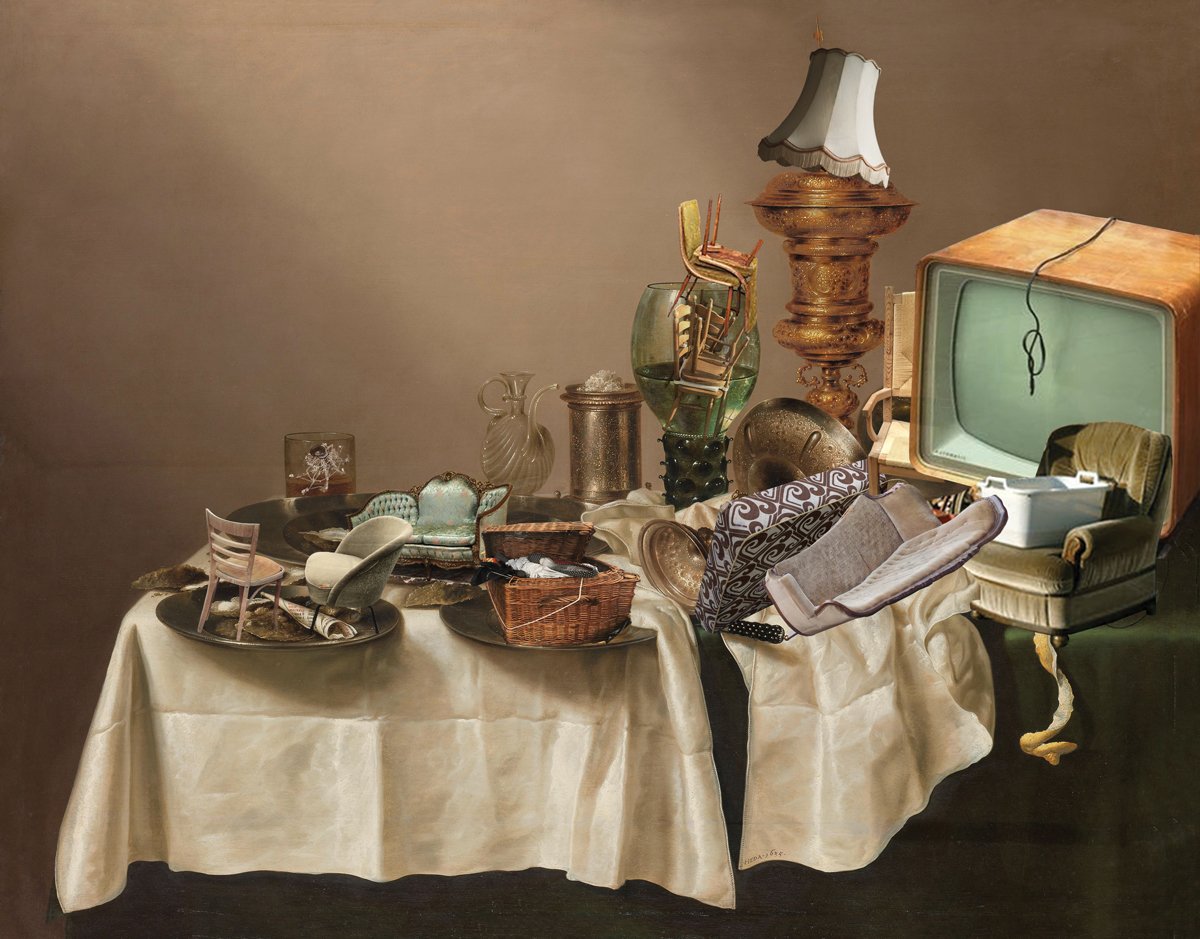
Still - life with Golden Cup & TV
Based on the work of Willem Claesz. Heda, 1635
NL
In dit werk wordt het klassieke stilleven opnieuw opgebouwd uit hedendaags afval gefotografeerde restanten van onze consumptiemaatschappij. Waar bij Heda het zilverwerk en kristal symbool stonden voor overvloed en status, ligt hier het residu van onze tijd: stoelen, kabels, een televisietoestel, weggegooide gebruiksvoorwerpen.
De compositie verwijst naar de 17e-eeuwse schildertraditie van vergankelijkheid en verval, maar vertaalt deze naar het nu. Het vergankelijke is niet langer fruit of wijn, maar plastic en elektronica materialen die juist niet vergaan. Zo ontstaat een nieuw soort vanitas: een spiegel van onze drang om te bezitten, te verzamelen en te bewaren wat uiteindelijk ons in bezit neemt. Een beeld dat balanceert tussen schoonheid en overdaad, tussen nostalgie en afval.
ENG
This work reconstructs the classical still life using contemporary waste photographed remnants of our consumer society. Where Heda’s silverware and crystal once symbolized abundance and status, here lie the residues of our time: chairs, cables, a television set, discarded objects of daily use.
The composition echoes the 17th-century tradition of vanitas, yet shifts its meaning. What once represented transience fruit, wine, and light has become plastic and electronics, materials that refuse to decay.
It is a modern meditation on possession and excess: a reflection of our desire to own, collect, and preserve what ultimately begins to own us. A delicate tension between beauty and waste, nostalgia and consumption.
Still Life with golden cup & TV
Based on the work of Willem Claesz, Heda 1635
Small 70 cm x 55 cm Edition of 10
Medium 100 cm x 78 cm Edition of 10
Large 130 cm x 100 cm Edition of 10
Larger size on request
Art Paper print with white border
Actual print size 50 cm x 39 cm
NL
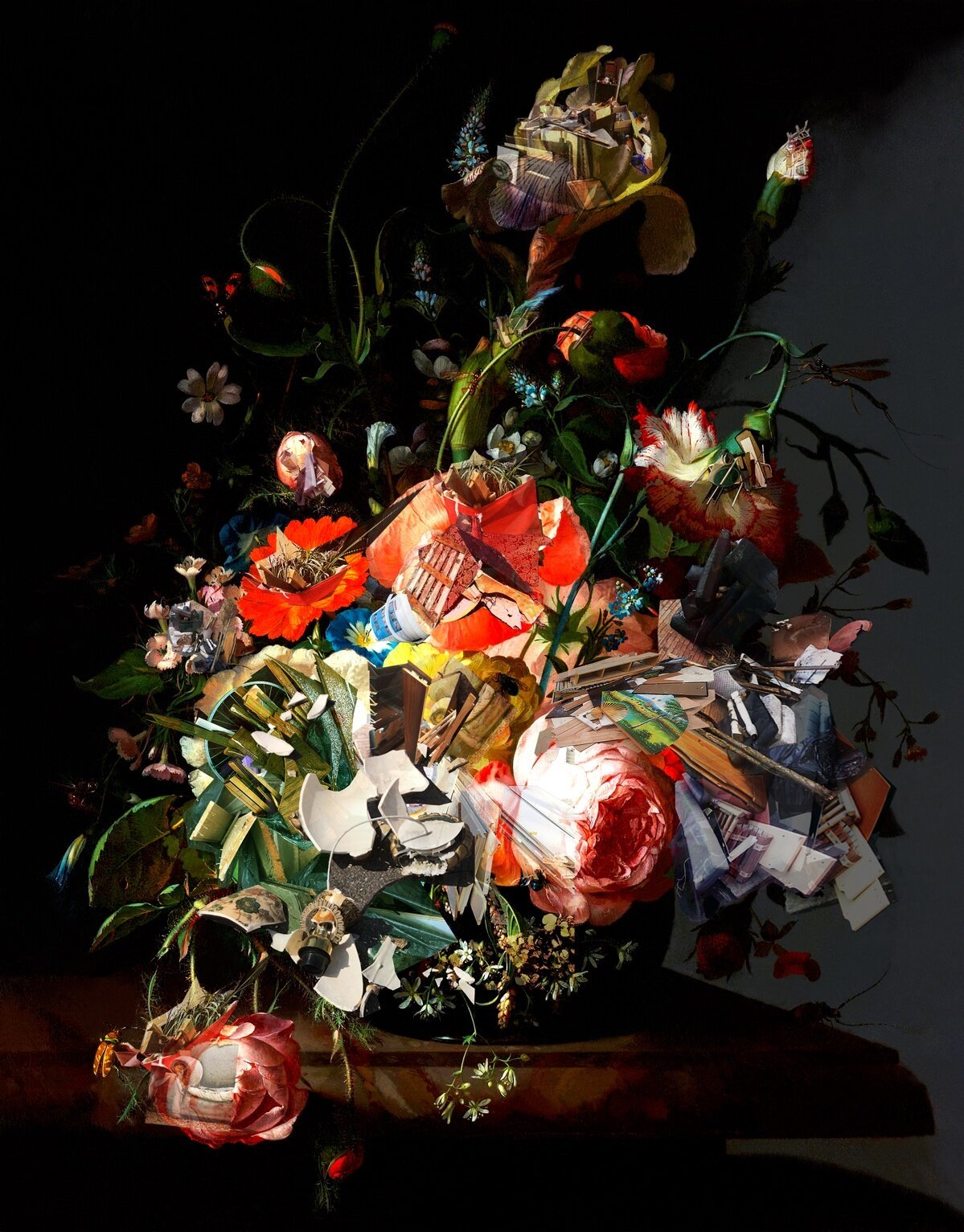
Gebaseerd op het werk van Rachel Ruysch Stilleven met bloemen ( 1716)
Uit de serie: Van bezit naar bezeten van bezit
In dit geherinterpreteerde stilleven bloeien schoonheid en verval naast elkaar.
De bloemen uit het meesterwerk van Rachel Ruysch uit 1716 ogen weelderig en verleidelijk. Pas bij nader kijken verschuift het beeld.
Bloemblaadjes lossen op in resten van weggegooide objecten, gescheurd verpakkingsmateriaal en sporen van hedendaagse overconsumptie.
Waar het klassieke stilleven ooit overvloed, vakmanschap en de rijkdom van
de natuur verheerlijkte, toont dit werk een andere realiteit.
Wat wij bezitten blijkt ons langzaam te bezitten. Het boeket raakt verstopt, verzwaard en overbelast door restanten van consumptie,
afleiding, verslaving en verlangen.
Schoonheid wordt hier geen belofte meer, maar een dunne laag die iets
onderliggends probeert te verhullen. Door de esthetiek van de
zeventiende-eeuwse schilderkunst te versmelten met hedendaags afval houdt
dit werk ons een confronterende spiegel voor.
Het stelt niet alleen de vraag of overvloed een teken is van rijkdom of van
een niet gevoelde leegte. Maar ook wanneer verandert schoonheid in
verdoving en waarom.
ENG
Based on the work of Rachel Ruysch, 1716
In this reimagined still life, beauty and decay bloom side by side. The flowers, inspired by Rachel Ruysch’s 1716 masterpiece, appear lush and radiant until the eye moves closer. Petals dissolve into fragments of discarded objects, splintered packaging, and remnants of contemporary excess.
This work examines how the things we own begin, subtly and silently, to own us. What was once a symbol of abundance now reveals a quiet suffocation: a bouquet overflowing with the traces of consumption, addiction, distraction, and desire.
By merging classical still life with modern refuse, the work holds up a mirror to our time. It asks a simple but uncomfortable question: What do we cherish? And what does it cost us to keep cherishing it?
Still Life — From possession to
possessed
AVAILABLE SIZES
Still Life - From possession to possessed by possession
Based on the work of Rachel Ruysch, 1716
Small 55 cm x 70 cm Edition of 10
Medium 90 cm x 115 cm Edition of 10
Large 110 cm x 140 cm Edition of 10
Larger size on request
Art Paper print with white border
Actual print size 39 cm x 50 cm
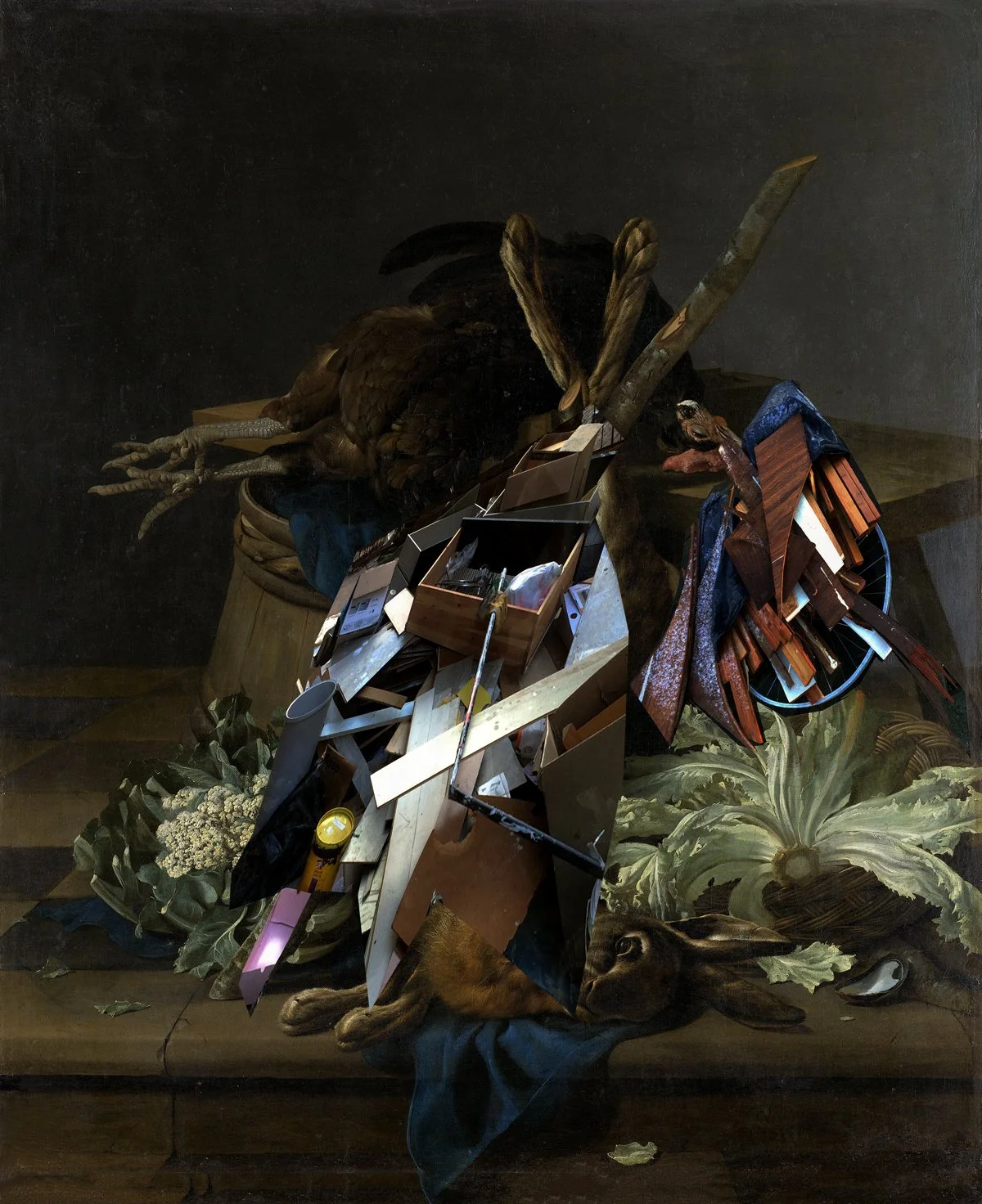
Still-life with Hare & Trash
Based on the work of Cornelis Lelienbergh, 17th century
NL
In deze opnieuw verbeelde vanitas zijn de buit en trofeeën van de jacht vervangen door de restanten van het moderne leven. Fragmenten van verpakkingen, weggegooide materialen en studioresten liggen over de tafel verspreid — hedendaagse trofeeën van overvloed én van maken.
De haas, ooit symbool voor zowel overvloed als sterfelijkheid, ligt nu onder het gewicht van afval en productie. Wat ooit als luxe werd geschilderd, is nu stortplaats geworden; wat ooit stil was, is nu onrustig.
Door afval te verweven met de beeldtaal van de Hollandse meesters, reflecteert het werk op transformatie, van bezit naar bezetenheid, van schoonheid naar last. Het stelt de vraag: als alles bezit kan worden, wat behoudt dan nog betekenis?
ENG
(after Cornelis Lelienbergh, 17th century)
In this reimagined vanitas, the spoils of the hunt have been replaced by the remains of modern life. Fragments of packaging, discarded materials, and studio debris spill across the table, contemporary trophies of excess and creation.
The hare, once a symbol of abundance and mortality, now lies beneath the weight of waste and production. What was once painted as luxury has become landfill; what was once still is now restless.
By weaving refuse into the language of the Dutch masters, the work reflects on transformation — from possession to obsession, from beauty to burden. It asks: when everything can be owned, what still holds meaning?
AVAILABLE SIZES
Still Life with Hare & Trash
Based on the work of Cornelis Lelienbergh, 1659
Small 60 cm x 75 cm Edition of 10
Medium 80 cm x 100 cm Edition of 10
Large 100 cm x 120 cm Edition of 10
Larger size on request
Art Paper print with white border
Actual print size 40 cm x 50 cm
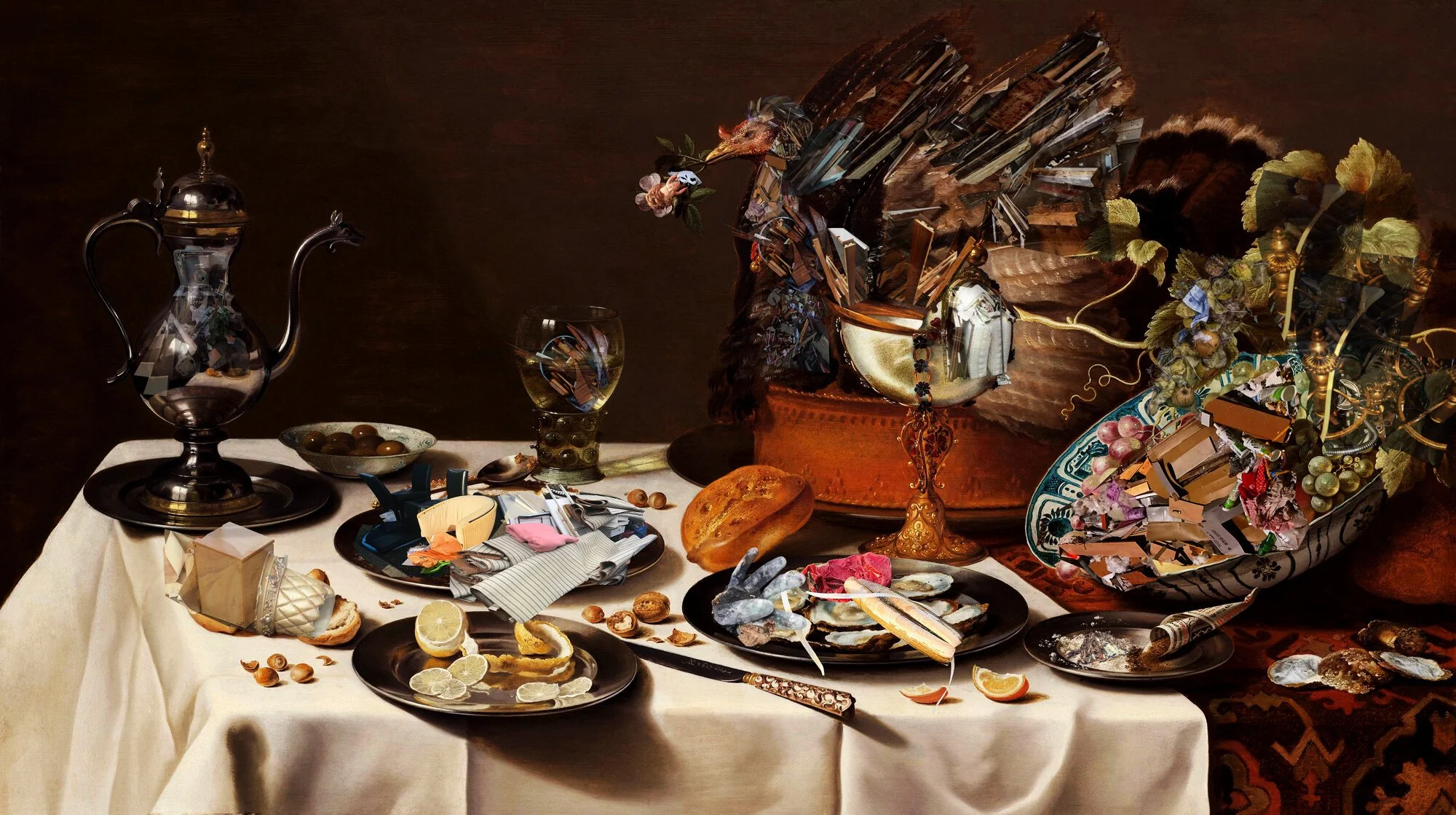
Based on the work of Pieter Cleasz, 1627
NL
In dit opnieuw verbeelde banket zijn de klassieke symbolen van overvloed en feestelijkheid vervangen door de restanten van hedendaagse verspilling. De trotse kalkoen die ooit het pronkstuk van rijkdom was, verrijst nu uit een nest van weggegooide materialen, verpakkingen, plastic en atelierafval.
Wat een feestmaal zou moeten zijn, verandert in een landschap van restanten; wat ooit luxe uitstraalde, weerspiegelt nu afval.
Door modern afval te verweven met de beeldtaal van de Gouden Eeuw, toont het werk een verschuiving in waarden:van bezit koesteren naar bezeten worden door bezit.
De voorwerpen op tafel spreken niet langer van verfijning, maar van overproductie, wegwerpcultuur en de onrustige honger van onze tijd. Gelukkig heeft de Turkey zijn Mat- Trash nog ;) ( maîtresse)
ENG
In this reimagined banquet scene, the symbols of abundance and celebration are quietly replaced by the remnants of modern excess. The proud turkey — once a centerpiece of luxury — now rises from a nest of discarded materials, packaging, plastic, and studio debris.
What should be a feast becomes a landscape of leftovers; what once stood for wealth now mirrors waste.
By merging contemporary trash with the visual language of the Dutch Golden Age, the work reveals a shift in values: from savoring possessions to being consumed by them.
The objects on the table no longer speak of refinement but of overproduction, disposability, and the uneasy appetite of our time. Luckily the turkey still has his Mat- Trash ( maitresse) ;
Still Life - The Turkey and
his Mat-Trash
Still Life - The Turkey and his Mat-trash
Based on the work of Pieter Cleasz, 1627
Small 100 cm x 55 cm Edition of 10
Medium 130 cm x 72 cm Edition of 10
Large 150 cm x 84 cm Edition of 10
Larger size on request
Art Paper print with white border
Actual print size 55 cm x 30 cm
Paradise…
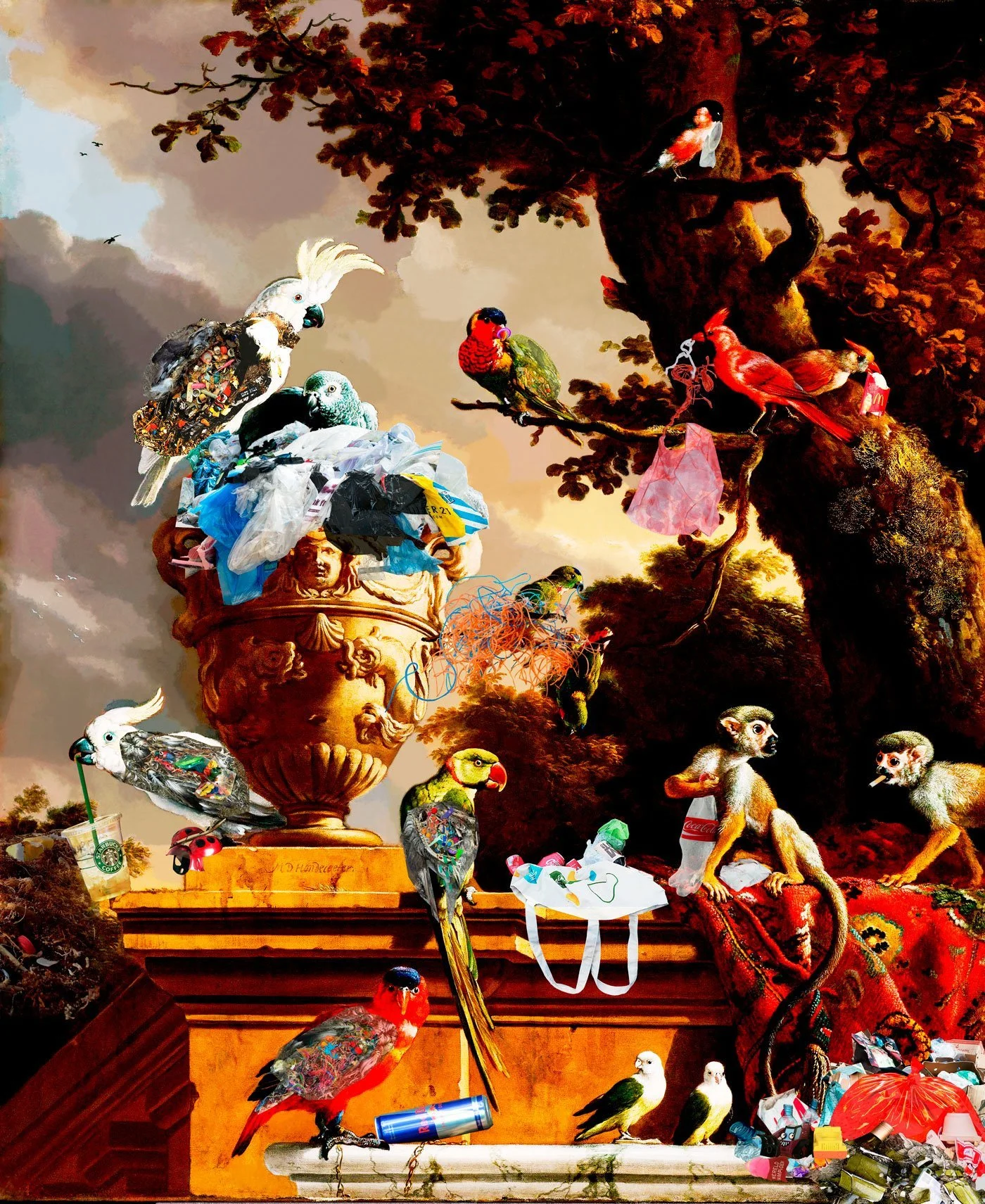
Gebaseerd op het werk van Melchior d’Hondecoeter, ca. 1690
NL
In dit opnieuw vormgegeven “paradijs” verzamelen exotische vogels en speelse aapjes zich in een tafereel dat op het eerste gezicht idyllisch lijkt. Maar wie beter kijkt, ziet hoe de schijn barst: veren versmelten met plastic, verstrikte vislijnen, flesdoppen, verpakkingen en restanten van een wegwerpmaatschappij. Zelfs de sokkel die ooit status uitstraalde, draagt nu de sporen van moderne vervuiling.
Door straatafvalfotografie digitaal te verweven met d’Hondecoeter’s klassieke compositie onderzoekt het werk een eenvoudige maar confronterende vraag: Wat gebeurt er wanneer ons afval onderdeel wordt van de natuur—zowel visueel als letterlijk?
Waar deze dieren ooit stonden voor overvloed, elegantie en verwondering, weerspiegelen ze nu de gevolgen van onze consumptie. Hun “paradijs” is niet langer ongerept; het is verstrengeld met wat wij weggooien en vergeten. Paradise nodigt de toeschouwer uit om voorbij de schoonheid te kijken en de paradox te voelen: Hoeveel van wat wij “natuur” noemen is nog werkelijk natuurlijk? En wanneer beginnen onze gewoontes het landschap, de mythes, en zelfs de dieren zelf te herschrijven?
ENG
Based on the work of Melchior d’Hondecoeter, ca. 1690
In this reimagined “paradise,” exotic birds and playful monkeys gather in a scene that seems idyllic at first glance. But the closer you look, the more the illusion breaks. Feathers merge with fragments of plastic, tangled fishing lines, bottle caps, wrappers, and disposable culture. Even the pedestal that once symbolized prestige now hosts the leftovers of modern life.
By digitally merging street-trash photography with d’Hondecoeter’s classical composition, the work explores a simple but unsettling question: What happens when our waste becomes part of the natural world—both visually and literally?
Where these animals were once depicted as symbols of abundance, elegance, and worldly wonder, they now mirror the consequences of our consumption. Their “paradise” is no longer untouched; it is entangled with the objects we discard and forget. Paradise… invites the viewer to look past the beauty and into the contradiction: How much of what we call “nature” is still natural? And at what point do our habits begin to rewrite the landscape, the myth, and even the animals themselves?
AVAILABLE SIZES
Paradise…
Based on the work of Melchior ‘d Hondecoeter ca 1690
Small 65 cm x 80 cm Edition of 10
Medium 90 cm x 110 cm Edition of 10
Large 110 cm x 133 cm Edition of 10
Larger size on request
Art Paper print with white border
Actual print size 45 cm x 55 cm
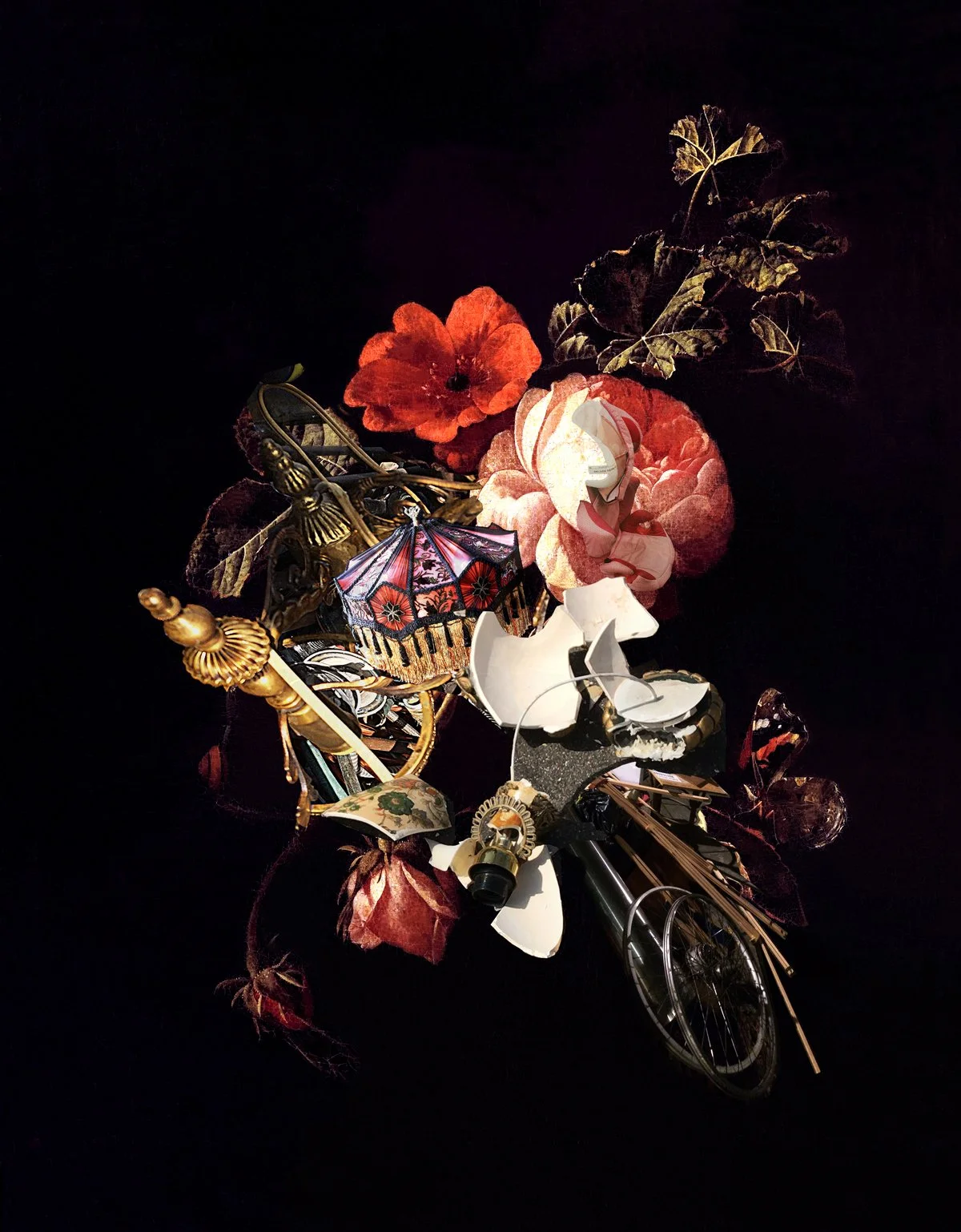
(after Elias van den Broeck, ca. 1670–1708)
NL
Een barok boeket, herboren uit de ruïnes van het moderne leven.Tussen kwetsbare bloemen en gebroken porselein bloeien opnieuw de restanten van lampen, ventilatoren en weggegooide wieltjes , relieken van consumptie, vermomd als schoonheid.
Het werk transformeert afval tot ornament en echoot de vanitas-traditie waarin bloemen verwelken en overvloed vergaat.Hier wordt afval een schat: een vluchtig monument voor ons verlangen naar eeuwigheid in een wereld die alles wegwerpt Zoals de Hollandse meesters viert het de pracht van het moment, maar fluistert het tegelijk over zijn verval. Wat wij weggooien onthult wie wij zijn en wat wij aanbidden.
ENG
A baroque bouquet reborn from the ruins of modern life. Between fragile petals and broken porcelain, fragments of lamps, fans, and discarded wheels bloom again relics of consumption disguised as beauty.
The work transforms refuse into ornament, echoing the vanitas tradition where flowers wither and abundance fades. Here, trash becomes treasure: a fleeting monument to our longing for permanence in a disposable world. Like the Dutch masters, it celebrates the splendor of the moment yet whispers of its decay. What we throw away reveals who we are, and what we worship.
Still - life Bouquet de Trashures
Stil life - Bouquet de Trashures
Based on the work of Elias van den Broeck, 1670-1708
Small 70 cm x 90 cm Edition of 10
Medium 90 cm x 115 cm Edition of 10
Large 100 cm x 128 cm Edition of 10
Larger size on request
Art Paper print with white border
Actual print size 40 cm x 51 cm
Pronk Still-Life -Tableau Vivant
Gebaseerd op het werk van Adriaen van Utrecht, 1644
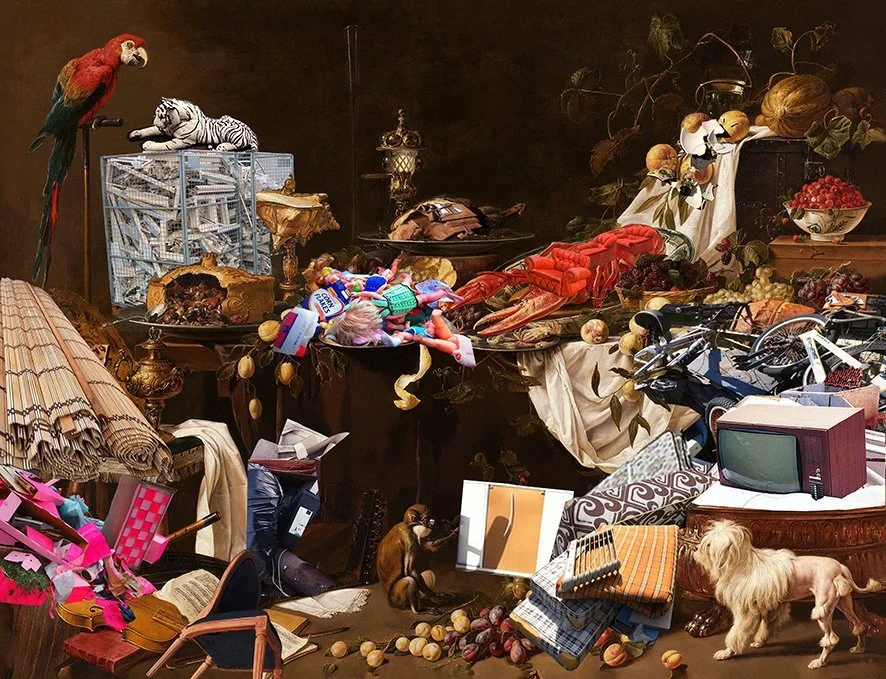
In dit hedendaagse pronkstilleven wordt de overdaad van de Gouden Eeuw opnieuw tot leven gewekt, maar nu met de restanten van onze tijd. Waar ooit kreeft, zilverwerk en exotische dieren de rijkdom van een huishouden verbeeldden, liggen nu speelgoedpoppen, afgedankte apparaten, fietsenwrakken en weggegooide materialen achteloos op tafel.
De compositie is levendig, bijna theatraal: een tableau vivant waarin luxe en verval samenvallen. De objecten vertellen het verhaal van een tijdperk dat niet langer pronkt met overvloed, maar verdrinkt in bezit, consumptie en wegwerpcultuur.Wat blijft er over van waardigheid wanneer onze rijkdom zich uitdrukt in afval? Welke schijn van welvaart houden we in stand? Zelfs als de fundamenten al verbrokkelen?
ENG
Based on the work of Adriaen van Utrecht, 1644
In this contemporary reimagining of a pronk still life, the grandeur of the Dutch Golden Age is revived yet transformed through the lens of modern excess. Where lavish foods, silverware, and exotic animals once symbolised wealth, we now find discarded toys, broken appliances, bicycle frames, and remnants of everyday consumption.
The composition becomes a vivid theatre of abundance and decay: a tableau vivant in which luxury collapses into waste and possession turns into burden.
What does wealth mean in an era where our treasures end up as trash? What illusion of prosperity do we cling to, long after its shine has faded?
Pronk Still Life - Tableau Vivant
Based on the work of Adriaen van Utrecht, 1644
Small 80 cm x 60 cm Edition of 10
Medium 100 cm x 75 cm Edition of 10
Large 125 cm x 95 cm Edition of 10
Larger size on request
Art Paper print with white border
Actual print size 52 cm x 40 cm
Still - Life Table for 2 many
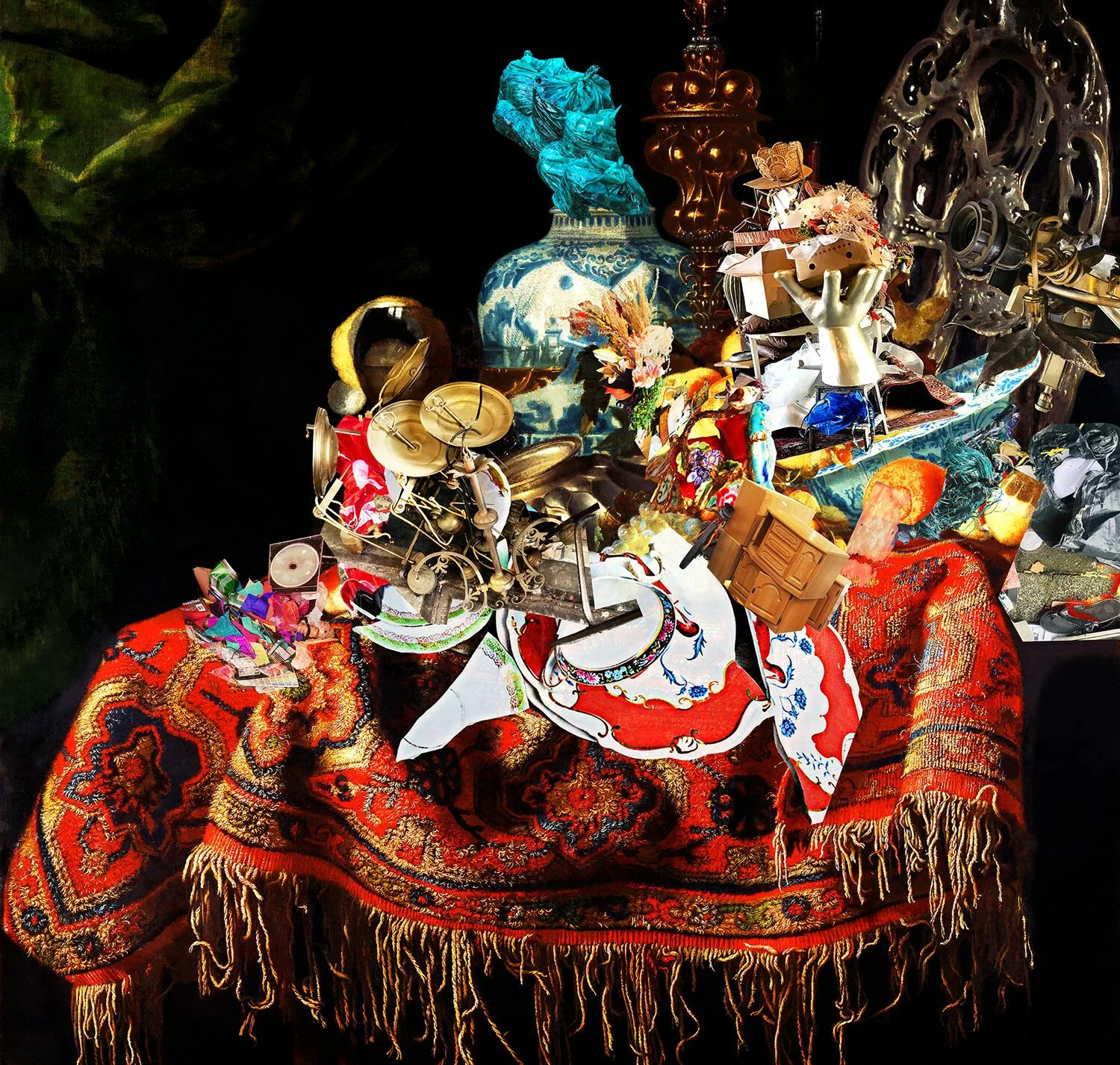
Based on the work of Simon Luttichuys /Francesco Fieravino (Il Maltese), 1650 - 1680
NL
In ‘Table for 2 many’ botst de stille weelde van de 17e eeuw met de overdaad van nu. Tussen Oosterse vazen, Perzisch tapijt en vergulde objecten dwarrelen restanten van ons hedendaagse bestaan: kapotte apparaten, weggegooide ornamenten, plastic fragmenten, afgedankte meubels.
De tafel, ooit symbool van gastvrijheid en verfijning, verandert hier in een toneel van overvulling een stilleven dat niet langer stil is, maar spreekt. Het werk onderzoekt wat er gebeurt wanneer consumptie het ritme bepaalt, wanneer schoonheid verdrongen wordt door ballast en wanneer onze bezittingen zich opstapelen tot een onverteerbare maaltijd.wat blijft er over van een tafel of van onszelf wanneer overvloed omslaat in verstikking?
ENG
Table for 2 many
Based on the work of Simon Luttichuys / Francesco Fieravino (Il Maltese), 1650–1680
In ‘Table for 2 many’ the quiet opulence of the 17th century collides with the excess of the present day. Amidst Eastern ceramics, rich Persian carpets and gilded objects: fragments of modern life spill across the scene, broken appliances, discarded ornaments, plastic remnants, abandoned furniture.
The table, once a symbol of refinement and hospitality, becomes a stage of overload: a still life that is no longer still, but insists on being heard. The work reflects on what happens when consumption sets the rhythm, when beauty is pushed aside by accumulation, and when possessions pile up into a meal we can no longer digest. What remains of a table or of ourselves when abundance turns into suffocation?
Table for 2 many
Based on the work of Simon Luttichuys /Francesco Fieravino (Il Maltese), 1650 - 1680
Small 80 cm x 76 cm Edition of 10
Medium 110 cm x 104 cm Edition of 10
Large 130 cm x 123 cm Edition of 10
Larger size on request
Art Paper print with white border
Actual print size 53 cm x 50 cm
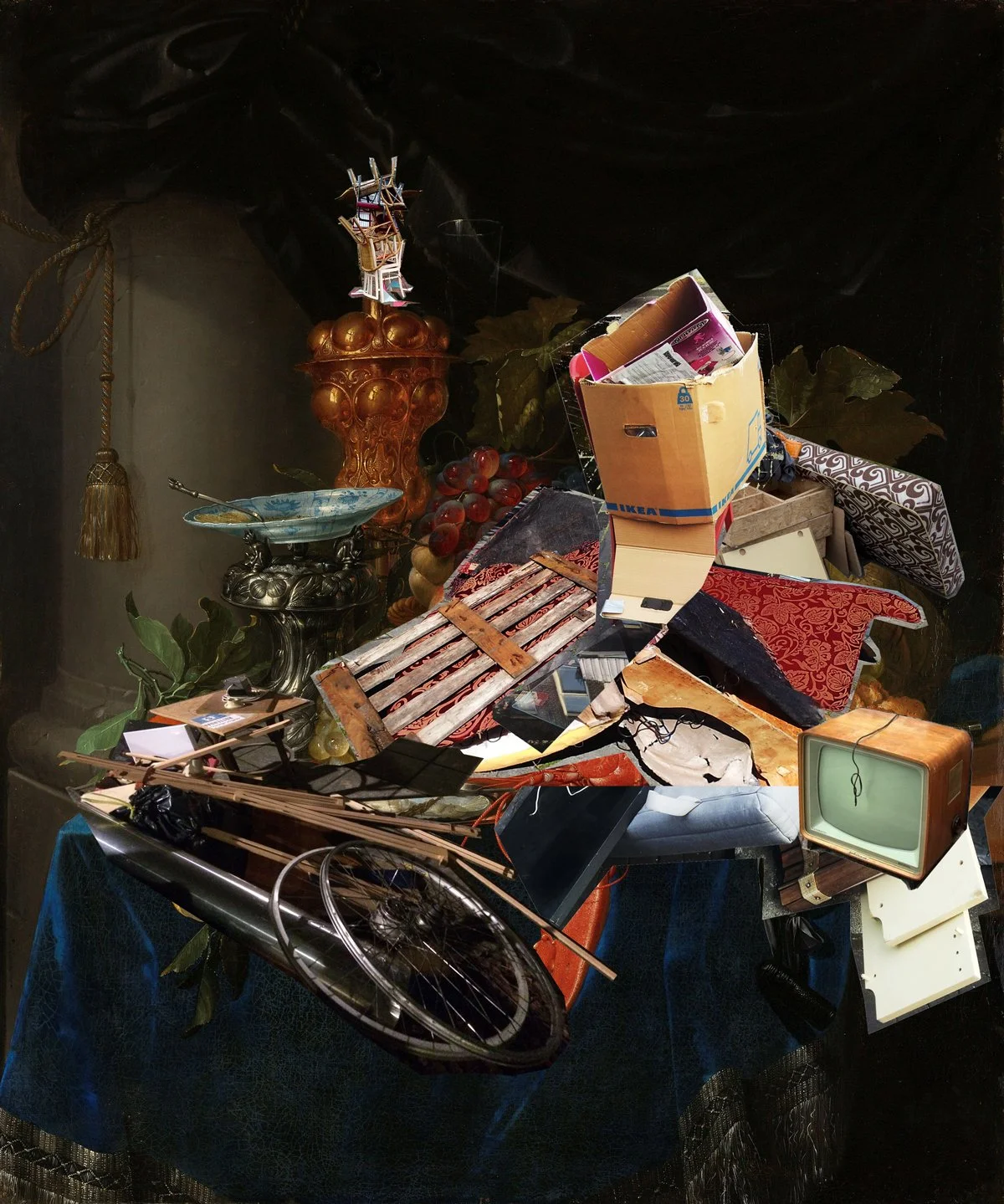
Still Life with golden cup & Ikea box
Based on the work of Pieter de Ring, 1640 - 1660
NL
In dit eigentijdse stilleven kantelt de verfijnde wereld van de 17e-eeuwse pronkstillevens abrupt de moderne tijd in. De gouden beker, ooit een symbool van rijkdom, status en zorgvuldig verzamelde luxe, wordt nu omringd door een Ikea-doos vol wegwerpcultuur: karton, plastic, meubelresten en gefragmenteerde objecten die onze tijd typeren.
De tafel is geen plaats van overvloed meer, maar een verzamelpunt van consumptiedrift met alles wat we kopen, gebruiken, vergeten en weggooien. De harmonie van De Ring wordt bewust verstoord door hedendaagse rommel, waardoor schoonheid en chaos elkaar uitdagen. Door verleden en heden te combineren, onthult het stilleven hoe onze objecten ons niet alleen omringen, maar ons vormen — en soms zelfs overnemen.
ENG
Based on the work of Pieter de Ring, 1640–1660
In this contemporary still life, the refined world of the 17th-century Dutch pronkstilleven abruptly collides with modern reality. The golden cup, once a symbol of wealth, status, and carefully curated luxury,now sits beside an Ikea box overflowing with the remnants of today’s throwaway culture: cardboard, plastic, dismantled furniture, and fragmented objects.
The table is no longer a stage for abundance but a gathering point of consumer excess with what we buy, use, ignore, and discard. De Ring’s harmony is deliberately disrupted by contemporary clutter, allowing beauty and chaos to confront one another. By merging past and present, the still life reveals how our objects do more than surround us they shape us, define us, and sometimes overwhelm us.
AVAILABLE SIZE
Still Life with golden cup & Ikea box
Based on the work of Pieter de Ring, 1640 - 1660
Small 70 cm x 84 cm Edition of 10
Medium 94 cm x 115 cm Edition of 10
Large 110 cm x 130 cm Edition of 10
Larger size on request
Art Paper print with white border
Actual print size 41 cm x 50 cm
Specificaties
Elk kunstwerk is verkrijgbaar in drie formaten: S, M en L
Grotere, maatwerkformaten zijn op aanvraag mogelijk
Limited edition serie van 10 werken per formaat
Geleverd met een Certificate of Authenticity
Afgedrukt op hoogwaardig mat Art Paper of Satin Photo Paper, professioneel gepresenteerd op 3 mm Dibond/Alu-bond
Elk werk is voorzien van een professioneel ophangsysteem
Prijzen zijn inclusief 9% btw, exclusief verzendkosten
Let op voor internationale klanten: eventuele invoerrechten, heffingen of bijkomende kosten zijn voor rekening van de koper.
Specifications
Each artwork is available in three sizes: S, M, and L in limited editions of 10 per size
Larger custom sizes are available upon request
Limited edition series of 10 pieces per size
Comes with a Certificate of Authenticity
Printed on high-quality matte Art Paper or Satin Photo Paper, professionally attached to 3 mm Dibond/Alu-bond
Each artwork is fitted with a professional hanging system
Prices include 9% VAT and exclude shipping costs
Note for international clients: additional duties, taxes, or import fees may apply. These are the responsibility of the buyer.